
K2 EDTA Blood Collection Tube – Uses, Specifications & Buying Guide
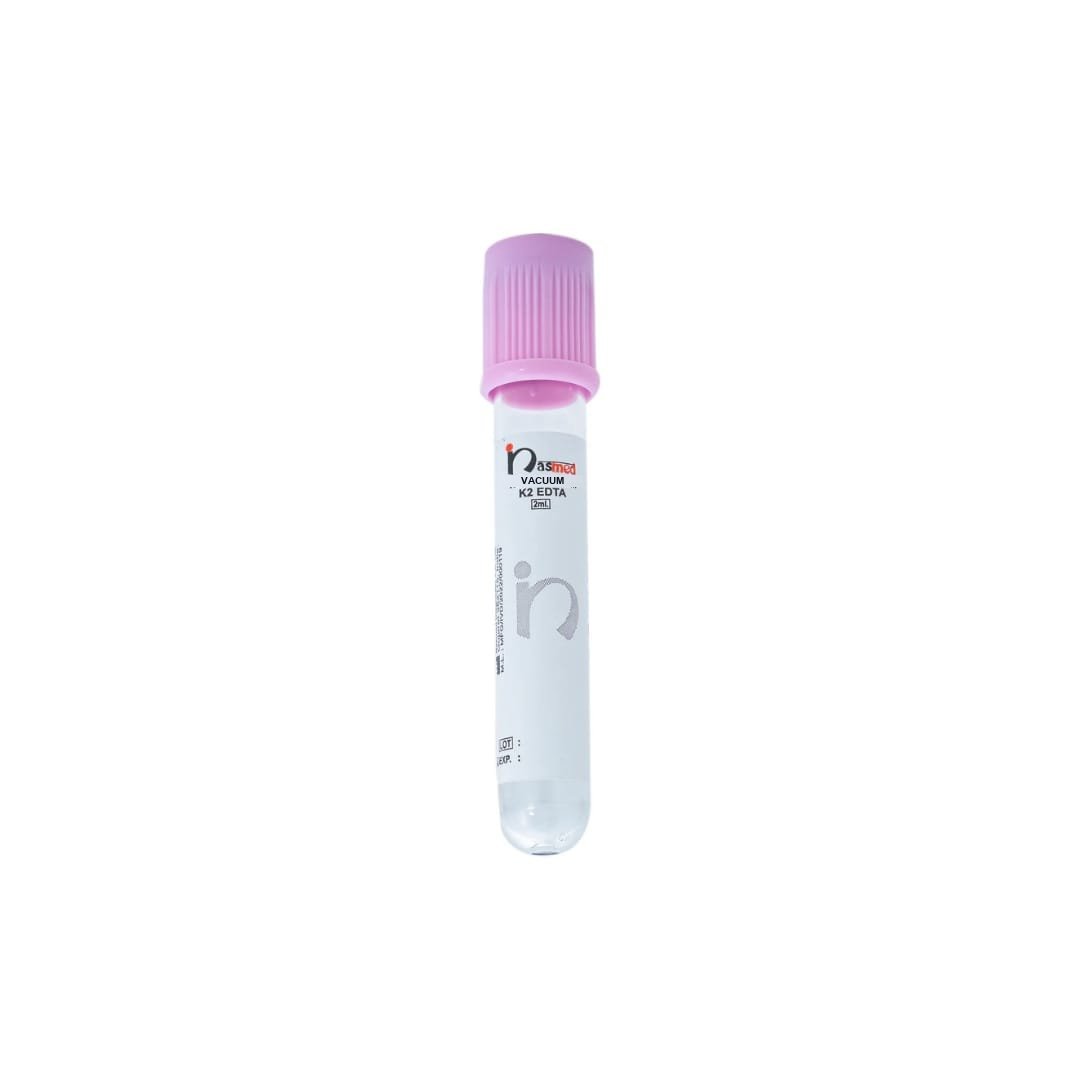
A K2 EDTA blood collection tube is a lavender/purple-capped vacuum tube coated with dipotassium EDTA (K2EDTA), used mainly for hematology tests like CBC, ESR, HbA1c, and blood grouping. The K2 EDTA anticoagulant chelates calcium ions to prevent clotting while preserving blood cell morphology, making it the preferred choice for accurate cell counts and hematological analysis.
Whether you run a diagnostic lab, hospital pathology department, or a nursing home collection center, choosing the right blood collection tube directly affects sample integrity and test accuracy. This guide covers everything you need to know about the K2 EDTA Blood Collection Tube from Nasmed Diagnostics — how it works, its specifications, its uses, and how it compares with other tube types.
What Is a K2 EDTA Blood Collection Tube?
A K2 EDTA blood collection tube is a sterile, vacuum-sealed tube pre-coated with dipotassium ethylenediaminetetraacetic acid (K2 EDTA), an anticoagulant. It is instantly recognizable by its lavender/purple stopper — the internationally standardized color code for EDTA tubes.
These tubes are designed to draw a precise, pre-set volume of venous blood using vacuum technology, mix automatically with the anticoagulant, and keep the sample in a liquid, non-clotted state suitable for hematology and molecular testing.
How Does K2 EDTA Anticoagulant Work?
K2 EDTA prevents blood from clotting through a process called chelation. Calcium ions (Ca²⁺) are essential cofactors in the coagulation cascade — without free calcium, the clotting factors cannot activate, and the fibrin clot never forms.
- K2 EDTA binds tightly to calcium ions in the blood
- This removes free calcium from the sample
- The coagulation cascade is interrupted at multiple steps
- Blood cells remain intact, dispersed, and unclumped
This makes K2 EDTA the anticoagulant of choice for hematology, since it preserves cell size and shape (morphology) far better than other additives — critical for accurate automated cell counting and manual blood smear examination.
Key Features & Specifications
| Feature | Detail |
|---|---|
| Anticoagulant | K2 EDTA (Dipotassium EDTA) |
| Cap Color | Lavender / Purple |
| Tube Type | Vacuum (evacuated) blood collection tube |
| Common Volumes | 2ml, 3ml, 4ml, 5ml (check current pack options on the product page) |
| Sterility | Individually sterilized, single-use |
| Recommended Inversions | 8–10 gentle inversions after draw |
| Primary Use | Hematology, CBC, HbA1c, blood grouping |
| Shelf Storage | Cool, dry place, away from direct sunlight |
What Is a K2 EDTA Tube Used For?
K2 EDTA tubes are the standard choice for a wide range of diagnostic tests, including:
- Complete Blood Count (CBC) and differential counts
- Erythrocyte Sedimentation Rate (ESR)
- HbA1c (glycated hemoglobin) testing for diabetes monitoring
- Blood grouping and Rh typing
- Reticulocyte counts
- Platelet counts — K2 EDTA inhibits platelet clumping, giving more accurate results
- Molecular diagnostics and PCR-based tests, where whole blood or plasma is required
- Peripheral blood smear preparation for morphological examination
K2 EDTA vs Other Blood Collection Tubes
Choosing the right tube depends on the test being performed. Here’s how K2 EDTA compares with other commonly used tubes from Nasmed’s range:
| Tube Type | Anticoagulant/Additive | Cap Color | Best For | Product Link |
|---|---|---|---|---|
| K2 EDTA Tube | Dipotassium EDTA | Lavender | Hematology, CBC, HbA1c, blood grouping | You are here |
| K3 EDTA Tube | Tripotassium EDTA | Lavender | Hematology (liquid-spray coated, common in older tube formats) | View Product |
| Lithium Heparin Tube | Lithium Heparin | Green | Plasma chemistry, electrolytes, ABG-adjacent testing | View Product |
| Gel Lithium Heparin Tube | Lithium Heparin + Separator Gel | Light Green | Plasma chemistry with faster serum/plasma separation | View Product |
Key takeaway: If your test requires whole blood with intact cell morphology (like CBC or blood grouping), K2 EDTA is correct. If your test requires plasma for chemistry panels, a heparin-based tube (with or without gel) is the right choice instead.
Why Choose Nasmed K2 EDTA Blood Collection Tubes?
- Consistent Vacuum Draw: Precisely calibrated vacuum ensures accurate blood-to-additive ratio, reducing hemolysis risk.
- Reliable Sample Integrity: Uniform K2 EDTA coating prevents micro-clot formation, which can otherwise cause instrument errors in automated analyzers.
- User Safety: Sterile, single-use, tamper-evident packaging designed for safe handling by phlebotomists and lab staff.
- Wide Compatibility: Works with standard needle holders and automated hematology analyzers used across Indian labs and hospitals.
Nasmed Diagnostics manufactures a complete range of blood collection consumables. You can explore the full catalog on our products page, or learn more about our company at nasmed diagnostic.
Regulatory Compliance & Safety Standards
Blood/specimen collection tubes are not unregulated consumables — in India, they fall under the Medical Devices Rules, 2017, administered by the Central Drugs Standard Control Organization (CDSCO), Ministry of Health & Family Welfare, Government of India. Specimen collection tubes (vacuum or non-vacuum) are officially classified as Class A medical devices under this framework.
📄 Reference: CDSCO – IVD Medical Devices FAQ, Government of India
When sourcing blood collection tubes for your lab, always verify that the manufacturer follows applicable quality and regulatory protocols — this protects both sample accuracy and patient safety.
Best Practices When Using K2 EDTA Tubes
- Fill to the marked line — under-filling changes the blood-to-EDTA ratio and can shrink red blood cells; overfilling can cause micro-clots.
- Invert gently 8–10 times immediately after draw — do not shake, as this can cause hemolysis.
- Follow correct order of draw — Draw EDTA tubes after coagulation (citrate) tubes but before other additive tubes to prevent cross-contamination.
- Store and transport at the recommended temperature to prevent sample degradation before testing.
- Test within the recommended time window (typically within a few hours) for the most accurate hematology results.
Frequently Asked Questions
Q1. What does K2 EDTA mean in a blood collection tube?
- K2 EDTA refers to dipotassium ethylenediaminetetraacetic acid, the specific salt form of EDTA used as an anticoagulant. Manufacturers apply K2 EDTA as a spray-dried layer inside the tube, and laboratories widely recommend it for hematology testing.
Q2. What is the difference between K2 EDTA and K3 EDTA tubes?
- Manufacturers spray-dry K2 EDTA inside the tube, whereas they typically add K3 EDTA as a liquid. Modern laboratories generally prefer K2 EDTA because it causes less sample dilution and provides more accurate hematocrit and cell count values. Compare specifications on our K3 EDTA tube page.
Q3. Can you use K2 EDTA tubes for biochemistry tests?
- No. K2 EDTA chelates calcium and other divalent ions, which interferes with several biochemistry and coagulation assays. For plasma chemistry tests, use a lithium heparin tube instead.
Q4. How many times should you invert a K2 EDTA tube after blood collection?
- Gently invert the tube 8 to 10 times immediately after the draw to mix the blood thoroughly with the anticoagulant and prevent hemolysis.
Q5. What is the shelf life of a K2 EDTA blood collection tube?
- Shelf life varies by batch and manufacturing date, typically printed on the tube label and outer pack. Always check the expiry date before use, since expired EDTA can lose its anticoagulant efficacy.
Q6. Is the K2 EDTA tube a vacuum or non-vacuum tube?
- Nasmed’s K2 EDTA tube uses vacuum technology; therefore, it automatically draws a fixed and accurate blood volume once the needle enters the tube, reducing manual errors compared to non-vacuum draws.
Q7. Where can I buy K2 EDTA blood collection tubes in bulk for my lab?
- You can browse pricing and pack sizes on the K2 EDTA product page, explore other consumables on our products page, or contact our team directly for bulk/institutional orders.
Get the Right Blood Collection Tubes for Your Lab
Accurate diagnostics start with the right sample collection tools. Nasmed’s K2 EDTA Blood Collection Tubes deliver consistent vacuum draw, reliable anticoagulation, and safe handling, making them a trusted choice for labs, hospitals, and collection centers.