
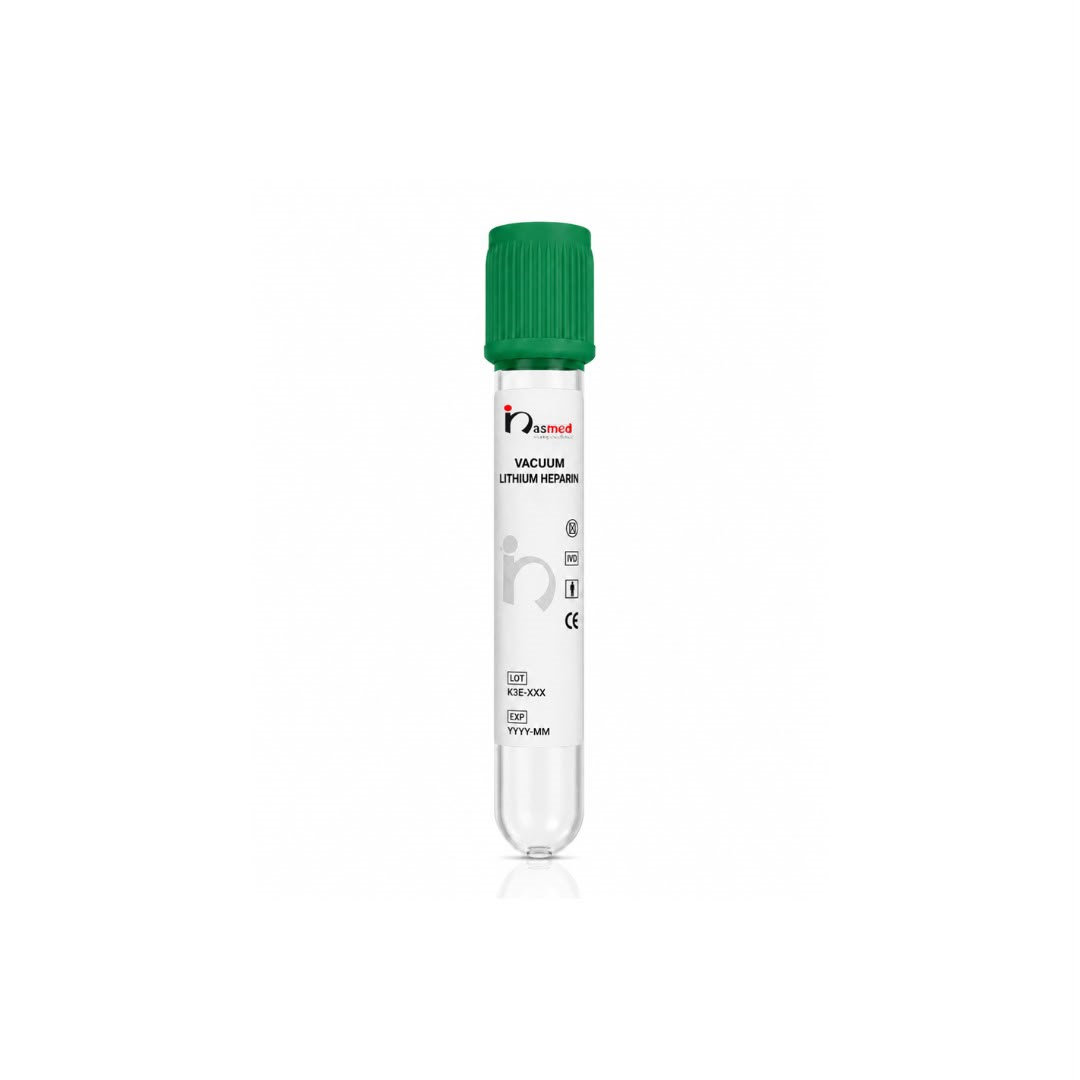
The Gel Lithium Heparin Blood Collection Tube from Nasmed Diagnostic is a sterile, vacuum-based plasma separator tube (PST) designed to deliver fast anticoagulation and clean plasma separation in a single draw. It combines a lithium heparin additive with a thixotropic separator gel, making it the preferred choice for clinical chemistry, STAT testing, and high-throughput diagnostic laboratories that need accurate, hemolysis-free plasma samples without a manual centrifugation transfer step.
Every batch is manufactured under strict quality protocols and is part of Nasmed’s complete range of blood collection consumables, available on our products page.
What Is a Gel Lithium Heparin Blood Collection Tube?
A Gel Lithium Heparin Blood Collection Tube is a light-green-top vacuum tube that contains two active components: lithium heparin, an anticoagulant that stops the blood from clotting, and an inert separator gel with a density between blood cells and plasma. During centrifugation, the gel moves upward and forms a stable barrier between the cellular components and the plasma, giving lab technicians a clean, ready-to-test plasma layer within minutes. It is commonly referred to as a PST tube (Plasma Separator Tube) in clinical laboratory terminology.
Key Features of Nasmed Gel Lithium Heparin Tubes
- Lithium Heparin Additive: Provides rapid and effective anticoagulation, preventing clot formation immediately after draw.
- Thixotropic Gel Separator: Forms a stable, leak-proof barrier between plasma and blood cells post-centrifugation.
- Vacuum-Draw Technology: Ensures a pre-set, accurate blood-to-additive ratio for every draw, reducing sample rejection.
- Medical-Grade PET/Glass Construction: Shatter-resistant tube body that is safe to transport and centrifuge.
- Color-Coded Hemogard-Type Cap: Light green cap for instant visual identification in busy lab settings.
- Sterile, Single-Use, Latex-Free: Individually sterilized to eliminate cross-contamination risk.
- Clear Fill-Volume Markings: Allows technicians to visually confirm correct draw volume before processing.
How the Gel Lithium Heparin Tube Works?
As soon as blood enters the tube under vacuum, lithium heparin disperses through the sample and inhibits the clotting cascade by activating antithrombin, which keeps the specimen in liquid (plasma) form. After collection, the tube is centrifuged at the recommended speed; the separator gel — lighter than blood cells but heavier than plasma — migrates to sit precisely between the two layers. This single-spin separation removes the need for a manual plasma transfer step, minimizing hemolysis, specimen mix-up, and turnaround time — which is especially valuable for STAT and emergency chemistry panels.
Specifications
| Parameter | Details |
|---|---|
| Additive | Lithium Heparin + Separator Gel |
| Cap Color | Light Green |
| Draw Technology | Vacuum (Evacuated Tube) |
| Tube Material | Medical-grade PET / Borosilicate Glass |
| Sterility | Sterile, Single-Use |
| Common Volumes | 2 mL / 3 mL / 3.5 mL / 4 mL |
| Shelf Life | As per batch expiry printed on label |
| Recommended Use | Clinical chemistry, plasma-based biochemical assays |
| Storage | Store at room temperature, away from direct sunlight |
Comparison: Gel Lithium Heparin Tube vs. Other Blood Collection Tubes
Choosing the right tube depends entirely on the test being performed. Here is how the Gel Lithium Heparin Tube compares with the other tubes in the Nasmed range:
| Tube Type | Cap Color | Additive | Sample Yielded | Primary Use |
|---|---|---|---|---|
| Gel Lithium Heparin Tube | Light Green | Lithium Heparin + Gel | Plasma | STAT clinical chemistry, electrolytes, liver & kidney panels |
| Clot Activator Tube | Red | Clot Activator (silica) | Serum | Serology, hormone assays, blood banking |
| K2 EDTA Tube | Lavender | K2 EDTA | Whole Blood | Complete Blood Count (CBC), hematology |
| K3 EDTA Tube | Lavender | K3 EDTA | Whole Blood | Hematology, blood grouping, molecular testing |
Explore the complete range of collection tubes on the Nasmed products page, or get in touch with our team via Contact Us if you need help selecting the right tube for your test panel.
Applications of Gel Lithium Heparin Tubes
- Liver function tests (LFT)
- Kidney function tests (KFT/RFT)
- Electrolyte panels (sodium, potassium, chloride)
- Blood glucose and lipid profile testing
- Cardiac markers and enzyme assays
- Emergency/STAT biochemistry in hospitals and diagnostic centers
Why Choose Nasmed Diagnostic for Blood Collection Tubes?
Nasmed Diagnostic manufactures and supplies a complete line of vacuum blood collection tubes trusted by pathology labs, hospitals, and diagnostic centers across India. Every tube is produced under controlled quality checks for additive accuracy, vacuum consistency, and sterility, so laboratories get reliable pre-analytical results, batch after batch. Our team also provides bulk supply, private labeling, and after-sales support for institutional and distributor partners — reach out through our Contact Us page for pricing and bulk order queries.
Correct Blood Collection Practice (As Per WHO Guidelines)
Proper order of draw, adequate mixing (8–10 gentle inversions right after collection), and correct fill volume are critical to prevent micro-clots and ensure valid plasma separation. Laboratories and phlebotomists are advised to follow internationally recognized protocols such as the WHO Guidelines on Drawing Blood: Best Practices in Phlebotomy to maintain specimen integrity and staff safety during every blood draw.
Frequently Asked Questions (FAQs)
1. What is a Gel Lithium Heparin Blood Collection Tube used for?
- It is used to collect blood for plasma-based clinical chemistry tests, such as liver function, kidney function, electrolyte, and glucose testing, where fast, clean plasma separation is required.
2. What is the difference between a plain lithium heparin tube and a gel lithium heparin tube?
- A plain lithium heparin tube only prevents clotting, requiring a manual plasma transfer after centrifugation. A gel lithium heparin tube additionally contains a separator gel that automatically forms a barrier between plasma and cells during centrifugation, saving time and reducing contamination risk.
3. How many times should a Gel Lithium Heparin Tube be inverted after collection?
- Most manufacturers, including Nasmed, recommend 8–10 gentle inversions immediately after the draw to mix the additive evenly with the blood and prevent micro-clot formation.
4. Can Gel Lithium Heparin Tubes be used for hematology tests like CBC?
- No. For hematology and CBC testing, an EDTA tube is required, since lithium heparin can interfere with cell morphology in blood smears.
5. What is the shelf life of Nasmed Gel Lithium Heparin Tubes?
- Shelf life varies by batch and is printed as an expiry date on every tube label and box. Tubes should be stored at room temperature, away from direct sunlight and moisture, until the printed expiry date.
6. Where can I buy Gel Lithium Heparin Blood Collection Tubes in bulk?
- You can order in bulk directly from Nasmed Diagnostic. Visit our products page to see the full range, or reach our sales team through the Contact Us page for pricing and distributor inquiries.