
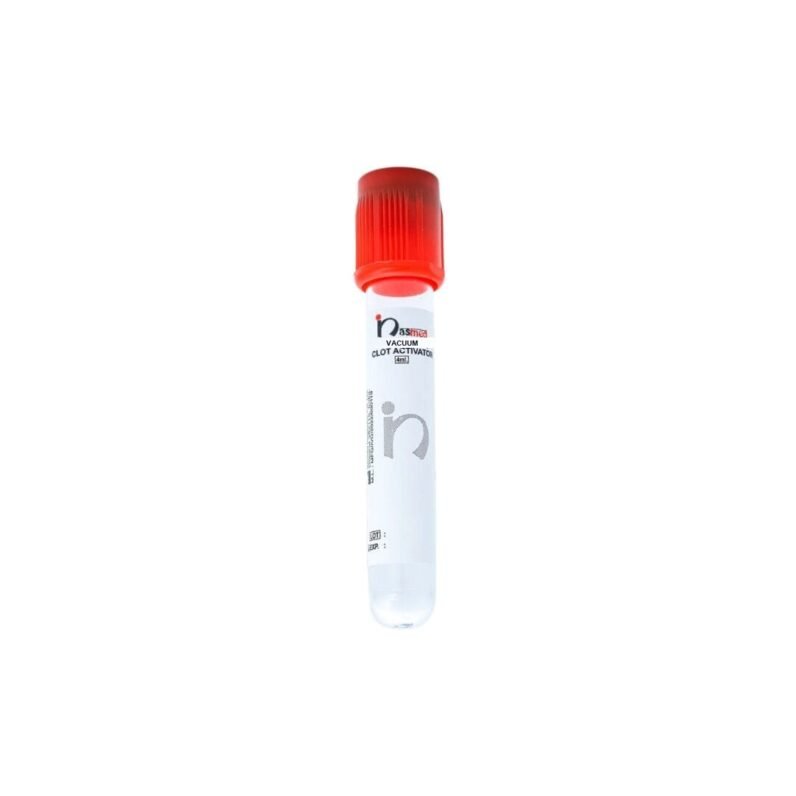
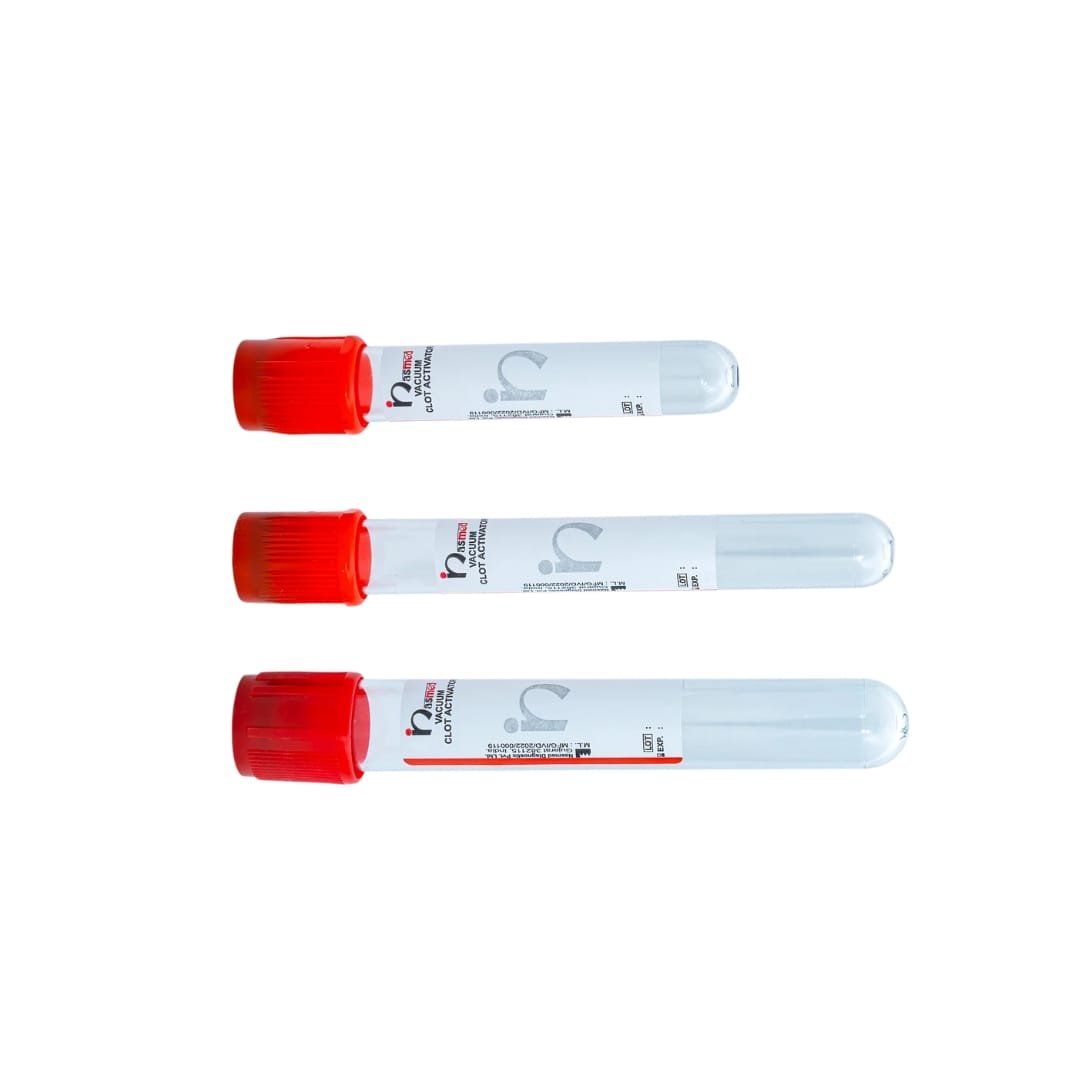
What Is a Clot Activator Blood Collection Tube?
A Clot Activator Blood Collection Tube is a sterile, vacuum-sealed tube used in phlebotomy to collect venous blood samples intended for serum-based diagnostic testing. The interior wall of the tube is coated with a fine layer of silica particles (the “clot activator”), which activates the intrinsic coagulation pathway the moment blood touches the tube surface. This reduces natural clotting time from the usual 30–60 minutes down to approximately 15–30 minutes, helping laboratories process samples faster without compromising serum quality.
These tubes are identified by their red or plain-colored cap in most international color-coding systems and are among the most commonly used tubes in any clinical laboratory, second only to EDTA tubes.
How Does a Clot Activator Tube Work?
When blood enters the tube, the silica-coated inner wall triggers platelet activation and the clotting cascade. As clotting proceeds, red blood cells, white blood cells, and platelets bind together into a solid clot, leaving behind clear serum. After centrifugation, the serum — free of cells and clotting factors — rises to the top and can be pipetted off for testing. This makes clot activator tubes ideal for tests where serum (not plasma) is required, such as liver function tests, lipid profiles, and hormone assays.
Composition & Design
| Component | Function |
|---|---|
| Silica clot activator coating | Accelerates coagulation cascade |
| Vacuum-sealed interior | Draws a pre-calibrated, accurate blood volume |
| Butyl rubber stopper | Leak-proof, prevents contamination and evaporation |
| Medical-grade PET/glass barrel | Break-resistant, shatterproof, autoclave-safe (glass variant) |
| Color-coded cap | Quick visual identification in the lab |
Key Features & Specifications
| Specification | Details |
|---|---|
| Tube Type | Clot Activator (Plain / Red Top) |
| Draw Volume | 2ml, 3ml, 4ml, 5ml, 6ml, 8ml, 10ml (as per pack variant) |
| Material | Medical-grade PET / Borosilicate Glass |
| Additive | Silica-based clot activator |
| Vacuum Technology | Precision vacuum-sealed for accurate draw |
| Closure | Color-coded butyl rubber stopper |
| Clotting Time | Approx. 15–30 minutes |
| Sterility | Sterilized by ETO (Ethylene Oxide) |
| Shelf Life | Typically 18–24 months from manufacturing |
| Compliance | CE Certified, ISO 13485 manufacturing standards |
| Recommended Use | Serum for biochemistry, serology, immunology, hormone assays |
Clot Activator Tube vs Other Blood Collection Tubes
Choosing the right tube depends on the test panel your lab is running. Here’s how the Clot Activator Tube compares with other commonly stocked blood collection tubes from Nasmed:
| Tube Type | Additive | Sample Type Obtained | Common Use Cases | Clotting/Mixing Time |
|---|---|---|---|---|
| Clot Activator Tube (this product) | Silica clot activator | Serum | LFT, lipid profile, RFT, hormone assays, serology | 15–30 min clot time |
| Gel Clot Activator Tube | Silica + separator gel | Serum (gel-separated) | Biochemistry, immunoassays, hormone panels requiring longer stability | 15–30 min clot time |
| Gel Lithium Heparin Tube | Lithium heparin + gel | Plasma | Stat chemistry, electrolytes, ammonia, urgent biochemistry | Immediate (no clotting needed) |
| K2 EDTA Tube | K2 EDTA anticoagulant | Whole blood | CBC, hematology, blood grouping, HbA1c | Immediate (no clotting needed) |
Key takeaway:
Use the plain Clot Activator Tube when you need pure serum without a gel barrier. Laboratories commonly prefer it for blood banking, serology, and certain hormone tests where gel interference must be avoided. If you need longer serum stability during transport or storage, choose the Gel Clot Activator variant.
Applications & Clinical Uses
Clot Activator Blood Collection Tubes are used across diagnostic and hospital settings for:
- Clinical Biochemistry – liver function tests (LFT), kidney function tests (RFT), lipid profile, blood glucose
- Serology & Immunology – widal test, dengue serology, hepatitis markers, HIV screening
- Endocrinology – thyroid profile (T3, T4, TSH), reproductive hormone panels
- Blood Banking – cross-matching and antibody screening where serum is required
- Therapeutic Drug Monitoring – serum drug level testing
Why Choose Nasmed Clot Activator Tubes?
With over a decade of manufacturing experience in the IVD consumables space, Nasmed Diagnostic designs blood collection tubes that meet the everyday demands of Indian hospitals, NABL-accredited labs, and diagnostic chains. Here’s what sets them apart:
- Consistent Vacuum Draw: We vacuum-calibrate every batch to reduce under-filling and the need for re-draws.
- Low Hemolysis Design: Optimized silica coating and tube wall finish reduce red cell rupture during collection.
- Leak-Proof Stoppers: Butyl rubber closures maintain vacuum integrity during storage and transport.
- Quality-Assured Manufacturing: Produced under ISO 13485-certified processes with batch-wise quality checks.
- Reliable Bulk Supply: Built for hospitals and labs that need dependable, large-quantity procurement without compromising on tube quality.
Explore Nasmed’s complete line of blood collection tubes and lab consumables to standardize your pre-analytical workflow with a single trusted supplier.
Best Practices for Sample Collection
Correct pre-analytical technique matters as much as tube quality. A few evidence-based practices, consistent with international phlebotomy guidance:
- Follow the correct order of draw. Draw blood culture and coagulation (citrate) tubes first, followed by clot activator/serum tubes, and then EDTA and other additive tubes to prevent cross-contamination.
- Invert the tube gently 5–6 times immediately after draw to mix the clot activator with the sample — never shake vigorously, as this can cause hemolysis.
- Allow the sample to clot fully at room temperature (15–30 minutes) before centrifugation.
- Centrifuge as per the manufacturer’s recommended speed and duration to achieve clean serum separation.
- Store and transport samples upright to prevent stopper leakage.
For detailed, internationally recognized guidance on blood collection procedure, refer to the WHO Guidelines on Drawing Blood: Best Practices in Phlebotomy, hosted by the U.S. National Institutes of Health (NIH).
Frequently Asked Questions
Q1. What do laboratories use clot activator blood collection tubes for?
- Laboratories use clot activator tubes to collect venous blood for tests that require serum, such as liver and kidney function tests, lipid profiles, hormone panels, and serology screening.
Q2. What color cap does a clot activator tube have?
Clot activator tubes typically use a red or plain cap, which laboratories internationally recognize as the color code for serum tubes without gel.
Q3. How long does blood take to clot in a clot activator tube?
- Blood in a clot activator tube usually clots within 15 to 30 minutes at room temperature, thanks to the silica coating that accelerates the coagulation cascade.
Q4. What is the difference between a clot activator tube and a gel clot activator tube?
- A plain clot activator tube separates serum through centrifugation alone, while a gel clot activator tube contains an additional gel layer that forms a physical barrier between the serum and clot, extending serum stability during storage and transport.
Q5. Can laboratories use clot activator tubes for hormone testing?
- Yes, laboratories commonly use clot activator tubes for hormone assays, such as thyroid profiles and reproductive hormone tests, because these tubes produce clean serum without anticoagulants that could interfere with immunoassay results.
Q6. Can automated lab analyzers use Nasmed clot activator tubes?
- Yes, Nasmed manufactures tubes to standard dimensions and vacuum specifications, making them compatible with most automated biochemistry and immunoassay analyzers used in Indian laboratories.
Q7. How should laboratories store clot activator tubes?
- Store unused tubes at room temperature, away from direct sunlight and humidity, and use before the printed expiry date to ensure vacuum integrity and reagent efficacy.
Order Clot Activator Blood Collection Tubes
Looking to stock up for your hospital, lab, or diagnostic center? Browse Nasmed’s full range of blood collection tubes or get in touch with our team for bulk pricing, product samples, and distributor inquiries.