
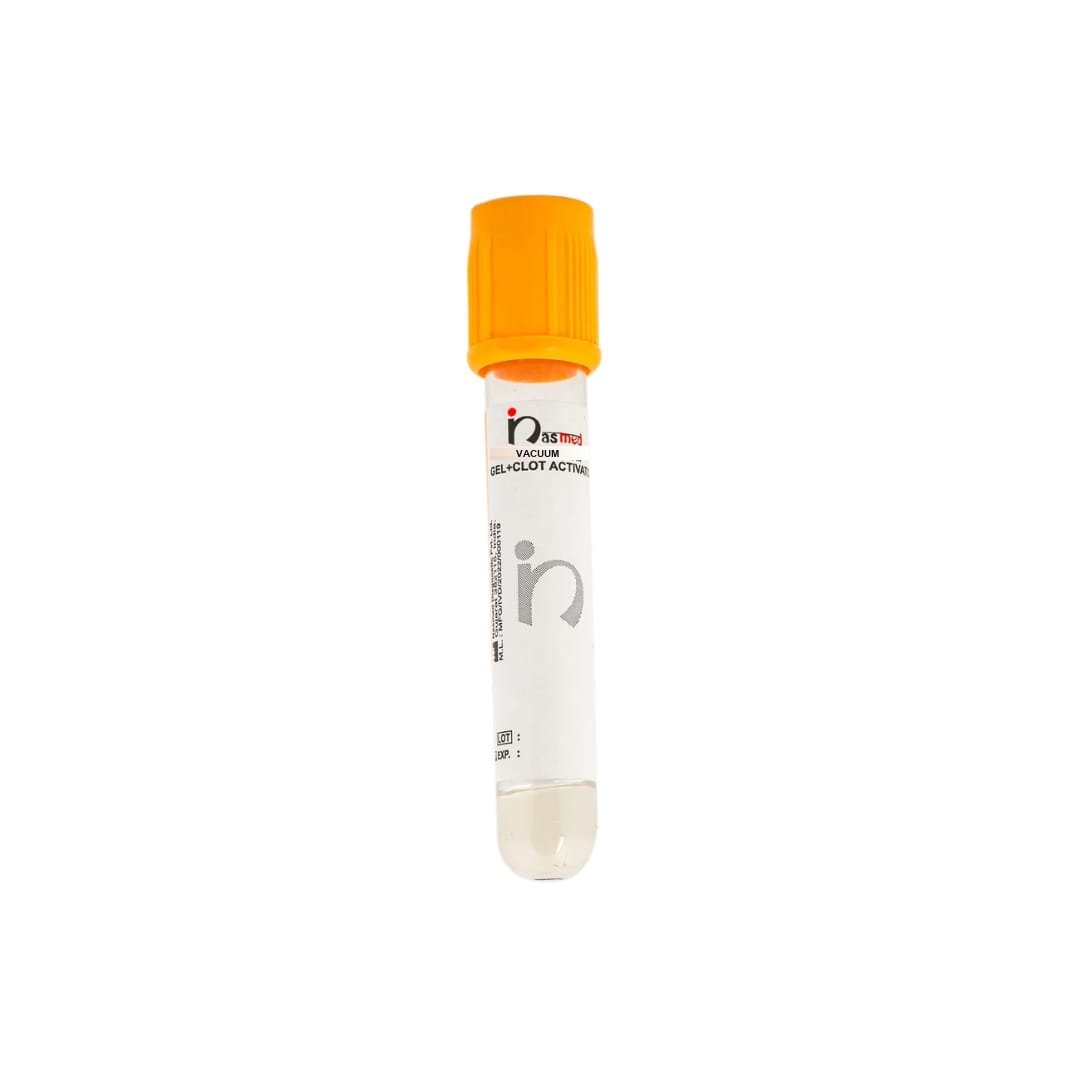
Gel Clot Activator Blood Collection Tubes (also known as SST tubes) are vacuum blood collection tubes coated with a silica-based clot activator and a separator gel, used to obtain pure serum samples for biochemistry, serology, immunology, and hormone testing. NASMED’s Gel Clot Activator Tube speeds up clotting, forms a stable barrier between serum and blood cells during centrifugation, and helps laboratories deliver accurate, contamination-free results.
If you’re a diagnostic lab, hospital, pathology centre, or a phlebotomy professional looking for a reliable, ISO-certified blood collection tube, this guide covers everything you need to know before you buy.
👉 Explore the full range on our Blood Collection Products page, or head straight to NASMED Diagnostic to browse all diagnostic consumables.
What Is a Gel Clot Activator Blood Collection Tube?
A Gel Clot Activator Blood Collection Tube is a vacuum-sealed, sterile tube used to draw venous blood for serum-based laboratory testing. The interior wall of the tube is coated with a fine silica clot activator that accelerates coagulation, while a inert, thixotropic gel sits at the bottom of the tube.
Once the blood clots and the tube is centrifuged, the gel forms a stable, semi-solid barrier between the clot (red blood cells, white blood cells, platelets) and the serum above it. This separation:
- Prevents cellular contamination of the serum sample
- Preserves analyte stability during transport and storage
- Reduces hemolysis and pre-analytical testing errors
- Allows serum to be used directly for testing without manual transfer
These tubes are commonly identified by a gold or red-gold cap in most tube-coding systems and are a staple in every clinical laboratory’s daily workflow.
How Does a Gel Clot Activator Tube Work?
- Blood Draw: Blood is drawn into the tube using standard vacuum phlebotomy technique.
- Mixing: The tube is gently inverted 5–6 times immediately after collection to mix the clot activator with the blood.
- Clotting: The blood is left to clot at room temperature for 15–30 minutes.
- Centrifugation: The tube is centrifuged, causing the gel to move upward and settle between the clot and the serum due to its specific density.
- Serum Separation: The clear serum sits above the gel barrier, ready for pipetting or direct loading onto automated analyzers.
Key Features of NASMED Gel Clot Activator Blood Collection Tubes
- Dual-Action Technology – Combines a silica clot activator with a separator gel in a single tube for fast, clean serum yield.
- Medical-Grade PET/Glass Construction – Shatter-resistant and chemically inert, ensuring no interference with test results.
- Consistent Vacuum Draw – Factory-calibrated vacuum ensures accurate blood-to-additive ratio and minimizes under-filling.
- Reduced Hemolysis – Smooth interior tube walls and controlled draw speed protect red blood cell integrity.
- Color-Coded, Tamper-Evident Caps – Easy visual identification and safe handling during transport.
- Barcode-Ready Labelling Surface – Compatible with LIS (Laboratory Information System) barcode labels for traceability.
- Sterile & Single-Use – Manufactured and packed in a controlled, ISO-certified environment.
Applications & Uses
Gel Clot Activator Tubes are widely used across diagnostic disciplines, including:
- Clinical Biochemistry – Liver function tests (LFT), kidney function tests (KFT), lipid profile, glucose, electrolytes
- Serology & Immunology – HIV, HBsAg, HCV, dengue, typhoid, and other infectious disease markers
- Hormone Assays – Thyroid profile (T3, T4, TSH), reproductive hormones, cortisol
- Tumor Marker Testing – PSA, CA-125, CEA, AFP
- Drug Level Monitoring and other serum-based diagnostic panels
Why Choose NASMED Gel Clot Activator Tubes?
NASMED Diagnostic manufactures its blood collection tubes under strict quality-control protocols, with consistent vacuum draw volumes, validated additive coating, and batch-wise quality testing. This ensures dependable performance for high-volume diagnostic labs, hospital pathology departments, and blood collection centres — helping reduce sample rejection rates and repeat draws.
To view technical datasheets, certifications, or place a bulk order, contact our team or browse our complete product catalog.
Gel Clot Activator Tube vs Other Blood Collection Tubes: Comparison Table
| Parameter | Gel Clot Activator Tube | Plain Clot Activator Tube | Gel + Lithium Heparin Tube | K2 EDTA Tube |
|---|---|---|---|---|
| Cap Color (standard) | Gold / Red-Gold | Red | Green / Light Green | Lavender / Purple |
| Additive | Silica clot activator + separator gel | Silica clot activator only (no gel) | Lithium heparin + separator gel | K2 EDTA (anticoagulant) |
| Sample Type Obtained | Serum | Serum | Plasma | Whole blood / Plasma |
| Clotting Required | Yes (15–30 mins) | Yes (15–30 mins) | No (anticoagulated) | No (anticoagulated) |
| Cell/Serum Separation | Automatic gel barrier | Manual (no barrier) | Automatic gel barrier | Not applicable |
| Primary Use Cases | Biochemistry, serology, hormones, immunoassays | Basic biochemistry & serology where gel isn’t required | Stat chemistry panels, plasma-based tests | CBC, hematology, blood grouping, HbA1c |
| Storage Stability of Sample | High (gel barrier prevents contamination) | Moderate (requires prompt serum separation) | High | Moderate (requires timely testing) |
| Ideal For | Routine + urgent diagnostic testing needing pure serum | Cost-sensitive routine serum testing | Fast turnaround chemistry panels | Hematology & blood bank testing |
Correct Usage & Handling Guidelines
- Always check the expiry date and vacuum integrity before use.
- Draw blood following standard venipuncture order-of-draw protocols.
- Invert the tube gently 5–6 times immediately after draw — never shake, as this can cause hemolysis.
- Allow the sample to clot fully (15–30 minutes) at room temperature before centrifugation.
- Centrifuge as per the manufacturer’s recommended speed and duration.
- Store and transport serum tubes upright at the temperature specified for the intended test.
For standardized specimen collection, handling, and biosafety protocols, laboratories in India can refer to official guidelines published by the Indian Council of Medical Research (ICMR), the apex government body for biomedical research and diagnostic standards in the country.
Who Should Use This Product?
- Pathology and diagnostic laboratories
- Hospital and nursing home phlebotomy departments
- Blood sample collection centres and home-collection services
- Research institutions requiring serum-based sample processing
- Distributors and bulk buyers of lab consumables
Frequently Asked Questions (FAQs)
1. What is a Gel Clot Activator Blood Collection Tube used for?
- It is used to collect venous blood for serum-based laboratory tests such as biochemistry, serology, hormone assays, and immunology panels. The gel and clot activator combination ensures fast clotting and a clean serum sample after centrifugation.
2. What is the cap color of a Gel Clot Activator Tube?
- Laboratories typically identify Gel Clot Activator Tubes by their gold or red-gold colored caps, following standard tube-coding conventions.
3. How long does blood take to clot in a Gel Clot Activator Tube?
- Blood typically clots within 15 to 30 minutes at room temperature. Do not centrifuge the tube until the clotting time is complete, as incomplete clotting can cause fibrin strands to form in the serum.
4. Can laboratories use Gel Clot Activator Tubes for hormone testing?
- Yes. Laboratories widely use these tubes for hormone assays such as thyroid profiles, cortisol, and reproductive hormone testing because the gel barrier keeps the serum sample stable and prevents cellular interference.
5. What is the difference between a Gel Clot Activator Tube and a Plain Clot Activator Tube?
- A Gel Clot Activator Tube contains an additional separator gel that automatically forms a barrier between serum and blood cells during centrifugation. A Plain Clot Activator Tube lacks this gel, requiring manual serum transfer soon after centrifugation to avoid contamination.
6. How should laboratories store Gel Clot Activator Tubes?
- Store unused tubes in a cool, dry place away from direct sunlight and extreme temperatures, following the storage instructions printed on the product packaging.
7. Can laboratories use NASMED Gel Clot Activator Tubes with automated analyzers?
- Yes, laboratories can directly load the clear serum obtained after centrifugation onto most automated biochemistry and immunoassay analyzers because the gel barrier prevents cellular debris from interfering with the sample probe.
8. Where can I buy NASMED Gel Clot Activator Blood Collection Tubes in bulk?
- You can explore our full range of blood collection tubes on the NASMED product page or contact our sales team directly for bulk pricing and distributor inquiries.
Need Help Choosing the Right Tube for Your Lab?
Our team can help you select the right blood collection tube based on your test panel, sample volume, and daily patient load. Get in touch with NASMED Diagnostic today for product datasheets, certifications, or bulk order pricing.