
Blood Collection Tubes Explained: Which Tube Is Used for Which Test?
Every accurate lab report starts with one small but critical decision: choosing the right container for the sample. Blood collection tubes and tests go hand in hand, because the wrong tube can change clotting time, dilute a sample, or damage delicate blood cells before the test even begins.
Whether you are a lab technician, a nursing student, or a hospital procurement officer, understanding which tube goes with which test helps you avoid rejected samples, repeat draws, and unreliable results.
In this guide, we break down the different types of blood collection tubes, their colour codes, and the exact tests each one supports, so that sample collection becomes faster, safer, and far more accurate.
What Are Blood Collection Tubes?
Blood collection tubes are sterile, single-use containers that hold a venous or capillary blood sample immediately after a phlebotomist draws it from a patient. Most tubes are vacuum-sealed, meaning they automatically pull in a pre-set volume of blood once the needle punctures the stopper.
As a result, this vacuum mechanism keeps the blood-to-additive ratio consistent, which is essential for tests like coagulation studies or glucose measurement.
Each tube contains a specific internal coating or additive, ranging from anticoagulants that stop clotting to clot activators that speed it up. The additive used, not just the tube itself, determines what kind of testing the sample is suitable for. That’s why understanding blood collection tubes and tests together is more useful than memorising colours alone.
Different Types of Blood Collection Tubes
Blood collection tubes are broadly grouped by the additive they contain:
- Plain (non-additive) tubes – used when no anticoagulant or clot activator is needed, mainly for certain chemistry and blood bank tests.
- Clot activator tubes – contain a substance that accelerates clotting so serum can be separated quickly for chemistry and serology testing.
- Gel separator tubes – include a gel barrier that separates serum or plasma from cells during centrifugation, keeping the sample stable for longer.
- EDTA tubes – contain an anticoagulant that binds calcium, preventing clotting so whole blood can be examined for haematology tests.
- Sodium citrate tubes – used specifically for coagulation testing, where the citrate-to-blood ratio must be precise.
- Heparin tubes – contain heparin as the anticoagulant, commonly used for plasma-based chemistry tests that need faster turnaround.
- Micro/paediatric tubes – smaller-volume versions of the above, designed for infants and patients with limited blood volume.
Manufacturers producing these under strict quality standards, such as a trusted manufacturer of blood collection tubes, ensure that additive concentrations and vacuum draw volumes remain consistent batch after batch, which directly affects diagnostic accuracy.
Which Tube Is Used for Which Blood Test?
This is usually the most confusing part for anyone new to phlebotomy. Here’s a simplified breakdown:
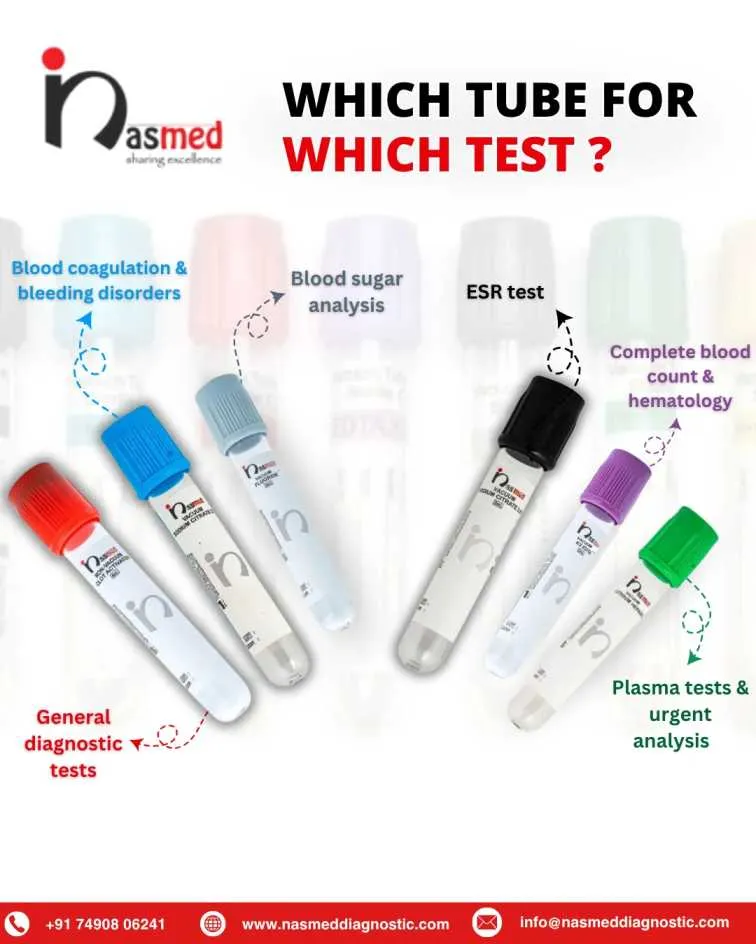
- Complete Blood Count (CBC): EDTA tube (lavender/purple top)
- Coagulation tests (PT, aPTT): Sodium citrate tube (light blue top)
- Basic metabolic panel, liver function, lipid profile: Clot activator or gel tube (red or gold top)
- Plasma chemistry, ammonia, some stat chemistry panels: Heparin tube (green top)
- Blood typing and crossmatching: EDTA or plain tube, depending on lab protocol
- Blood cultures: Special culture bottles, not standard vacuum tubes
- Cell-free DNA and molecular testing: Specialised cell-free DNA stabilisation tubes
Because different labs sometimes follow slightly different protocols, it’s always best to confirm the exact tube requirement with your lab’s test menu before collection.
Blood Collection Tube Colors and Their Uses
Colour coding on the stopper is the fastest way to identify a tube’s purpose during a busy shift:
- Red top: No additive or a clot activator; used for serum chemistry and serology
- Gold/Yellow top: Gel separator with clot activator; used for chemistry panels
- Lavender/Purple top: EDTA; used for haematology and CBC
- Light Blue top: Sodium citrate; used for coagulation studies
- Green top: Heparin; used for stat chemistry and plasma testing
- Grey top: Sodium fluoride/potassium oxalate; used for glucose testing
- Black top: Sodium citrate (buffered) for ESR testing
A reliable red tube for blood collection with a properly calibrated clot activator ensures faster serum separation and cleaner results for routine chemistry work.
Contact UsEDTA Tube: Which Tests Use It?
The EDTA tube is one of the most widely used blood collection tubes in any diagnostic lab. EDTA works by binding calcium ions in the blood, which stops the clotting cascade and keeps blood cells intact in their natural shape for microscopic and automated analysis.
Common tests that rely on the EDTA tube for CBC and related haematology work include:
- Complete Blood Count (CBC)
- Haemoglobin and haematocrit levels
- Reticulocyte count
- ESR (in some protocols)
- HbA1c testing
- Blood grouping in certain laboratories
Because EDTA preserves cell morphology so well, it is the standard anticoagulant recommended for almost all routine haematology testing worldwide.
Sodium Citrate and Heparin Tubes: Uses and Tests
Sodium citrate tube: Laboratories use this tube almost exclusively for coagulation testing, such as Prothrombin Time (PT) and Activated Partial Thromboplastin Time (aPTT). Therefore, you must fill the sodium citrate tube to the exact volume marked on the tube, since an incorrect blood-to-citrate ratio can produce falsely prolonged or shortened clotting results.
Heparin tube: Heparin acts as an anticoagulant by inhibiting thrombin, allowing plasma to be separated quickly without waiting for clot formation. The heparin tube test and uses typically include:
- Arterial blood gas analysis
- Ammonia levels
- Certain stat electrolyte panels
- Chromosome analysis in some cytogenetic labs
Labs that need dependable, contamination-free options often source a gel lithium heparin blood collection tube for smoother plasma separation, or a gel clot activator blood collection tube when faster serum yield is the priority.
Common Blood Collection Tube Selection Mistakes
Even experienced phlebotomists occasionally run into avoidable errors. Some of the most common mistakes include:
- Wrong order of draw – Collecting tubes in the wrong sequence can cause cross-contamination of additives between tubes, altering results.
- Underfilling citrate tubes – An incorrect blood-to-citrate ratio directly affects coagulation results.
- Vigorous shaking instead of gentle inversion – This can cause haemolysis, especially in EDTA and heparin tubes.
- Using expired tubes – Additive potency decreases over time, affecting anticoagulation or clot activation.
- Ignoring storage temperature – Some tubes, especially those meant for hormone or molecular testing, need specific storage conditions.
- Mismatching tube type with test requirement – Sending a heparin sample for a test that requires EDTA can lead to sample rejection.
Following a standardised order of draw, as outlined in international phlebotomy guidelines from the Clinical and Laboratory Standards Institute, significantly reduces the risk of these errors and keeps results reliable across different collection sites.
Blood Collection Tubes and Tests: Quick Reference Guide
| Tube Colour | Additive | Common Tests |
|---|---|---|
| Red | Clot activator / none | Serum chemistry, serology |
| Gold/Yellow | Gel + clot activator | Liver, kidney, lipid panels |
| Lavender | EDTA | CBC, HbA1c, blood grouping |
| Light Blue | Sodium citrate | PT, aPTT, coagulation studies |
| Green | Heparin | Ammonia, ABG, stat chemistry |
| Grey | Sodium fluoride | Glucose testing |
This quick reference is meant as a general guide; always cross-check with your lab’s own testing protocol, since minor variations exist between institutions.
Why Choose Nasmed Diagnostics
Choosing the right tube starts with choosing a reliable manufacturer. Nasmed Diagnostics Pvt. Ltd., based in Nandoli, Gandhinagar, Gujarat, is recognised as India’s leading blood collection tubes manufacturing company, producing Vacuum, Non-Vacuum, Micro/Paediatric, Cell-Free DNA, and Gel Lithium Heparin tubes, along with urine containers and custom diagnostic disposables.
Led by Directors Kush Patel and Suril Shah, the company operates out of a CDSCO-certified, ISO 7 clean room facility (Class 10,000), ensuring contamination-free manufacturing that hospitals, clinics, and diagnostic labs across India rely on. Nasmed’s tubes are also built to support sensitive applications, including their documented role where blood collection tubes are crucial in vaccine manufacturing, reflecting the same precision standards used in routine diagnostic testing.
For labs and hospitals looking for affordable pricing, international material compliance, and dependable after-sales support, Nasmed Diagnostics offers a full range of blood sample collection tubes suited to every testing requirement.
Contact Nasmed Diagnostics: 📍 Survey No 282 (Old Block No 213 Paiki), Nandoli, Gandhinagar, Gujarat 382115, India 📞 +91 79908 01393 | WhatsApp: +91 74908 06241 📧 info@nasmeddiagnostic.com
Frequently Asked Questions
Q.Which blood collection tube is used for a CBC test?
- A CBC requires an EDTA tube (lavender top). EDTA binds calcium and stops clotting while keeping blood cells intact in their natural shape, which is essential for accurate cell counting under a microscope or an automated analyser.
Q.What are the different types of blood collection tubes?
- The main types include plain (non-additive) tubes, clot activator tubes, gel separator tubes, EDTA tubes, sodium citrate tubes, heparin tubes, and smaller micro/paediatric tubes for infants or low-volume draws. Each contains a different additive suited to a specific category of testing.
Q.What do the different blood collection tube colors mean?
- The stopper colour indicates the additive inside: red or gold for clot activator/gel (chemistry and serology), lavender for EDTA (haematology), light blue for sodium citrate (coagulation), green for heparin (stat chemistry and plasma testing), and grey for sodium fluoride (glucose testing).
Q.Which tube is used for coagulation tests?
- Coagulation tests such as PT and aPTT require a sodium citrate tube (light blue top). You must fill the tube to the exact fill line, since an incorrect blood-to-citrate ratio can produce falsely prolonged or shortened results.
Q.What is an EDTA tube used for?
- Labs use the EDTA tube mainly for haematology testing, including CBC, haemoglobin and haematocrit levels, reticulocyte count, HbA1c, and, in some cases, blood grouping. It preserves cell morphology better than other anticoagulants.
Q.What is a heparin tube used for?
- Labs use the heparin tube for plasma-based tests that need fast turnaround, such as arterial blood gas analysis, ammonia levels, certain stat electrolyte panels, and chromosome analysis in some cytogenetic laboratories.
Conclusion
Getting blood collection tubes and tests right isn’t just a procedural detail, it’s the foundation of accurate diagnosis. From the EDTA tube used for CBC to the sodium citrate tube reserved for coagulation studies, each tube plays a specific, non-interchangeable role in the testing process. By understanding tube colours, additives, and common selection mistakes, healthcare professionals can reduce sample rejection rates and deliver faster, more reliable results to patients.
Contact Us