
Agar Plates: Quality vs Sterility Explained
Agar Plates: Types, Uses, Sterility, Quality and Selection Guide
If you work in a diagnostic lab, hospital pathology department, or research facility, you already know something important: an agar plate is only as good as the science and manufacturing behind it. A contaminated plate, an inconsistent pour, or a poorly stored batch can silently derail an entire culture report. In diagnostics, that margin for error simply doesn’t exist.
At Nasmed Diagnostics Pvt. Ltd., this is the exact problem our team was built to solve. We’re a CDSCO certified manufacturer of diagnostic lab disposables. Our facility runs out of an ISO 7 clean room (Class 10,000) in Gandhinagar, Gujarat. To us, agar plates aren’t just a product — they’re a critical link in every accurate diagnosis. In this guide, we’ll walk through what agar plates are, the different types available, how to judge their quality, common sterility issues, and how to choose the right plate for your lab’s needs.
What Are Agar Plates and How Are They Used in Microbiology?
Before diving into types and comparisons, it helps to understand exactly what an agar plate is and why it has remained the backbone of microbiological testing for over a century.
Despite advances in molecular diagnostics, culture-based testing on agar plates is still the gold standard for confirming live organism growth, studying colony behaviour, and validating results from faster screening methods — which is exactly why plate quality can’t be treated as a minor detail.
In practice, agar plates are used across nearly every stage of microbiological work:
- Isolating microorganisms from clinical, environmental, or food samples
- Identifying bacterial species based on colony shape, colour, and growth pattern
- Testing antibiotic susceptibility through zone-of-inhibition studies
- Quality control testing in pharmaceutical and food manufacturing
- Environmental monitoring of clean rooms and production areas
The reliability of any culture-based test — from a simple urine culture to a hospital-acquired infection screen — depends heavily on the quality of the agar plate itself, which is why sourcing from a manufacturer with strict, traceable manufacturing standards genuinely matters.

What Are the Different Types of Agar Plates?
Not all agar plates serve the same purpose. Depending on what a lab is trying to grow, isolate, or rule out, different formulations are used:
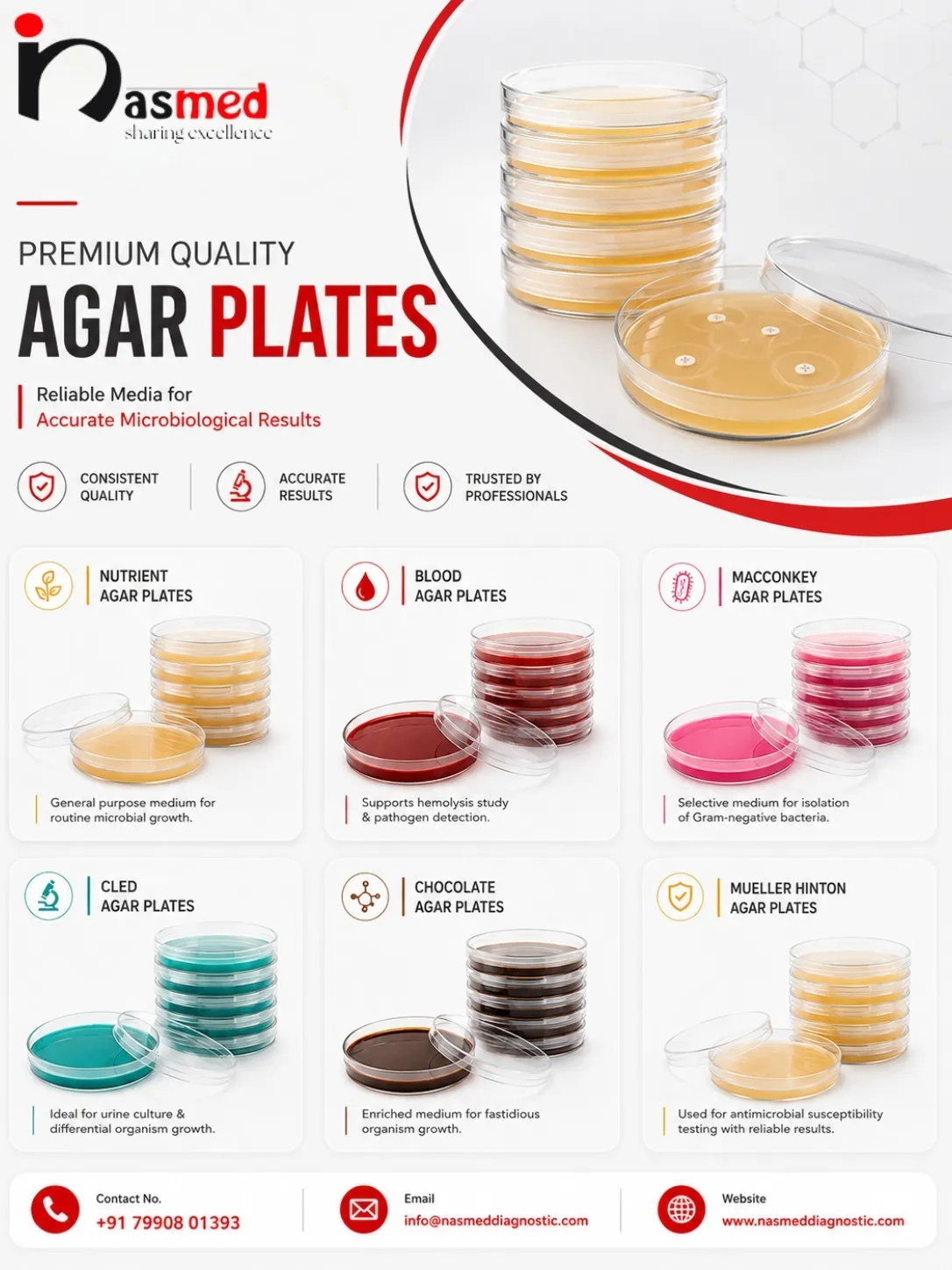
1. Nutrient Agar Plates A general-purpose medium containing basic nutrients like peptone, beef extract, and sodium chloride. It supports the growth of a wide range of non-fastidious organisms and is commonly used for routine cultivation and teaching purposes.
2. Blood Agar Plates Enriched with 5–10% sheep or horse blood, this is one of the most widely used differential media in clinical microbiology. It supports the growth of fastidious organisms and reveals haemolytic patterns (alpha, beta, or gamma), which are key to identifying pathogens like Streptococcus species.
3. MacConkey Agar Plates A selective and differential medium used to isolate Gram-negative bacteria, particularly from the Enterobacteriaceae family, while inhibiting Gram-positive growth.
4. Chocolate Agar Plates Made by heating blood agar until the red blood cells lyse, giving it a brown, “chocolate” colour. It’s essential for culturing fastidious organisms like Haemophilus influenzae and Neisseria species.
5. Selective and Enrichment Agar Plates These are formulated with specific inhibitory agents or nutrients to encourage the growth of a target organism while suppressing competing flora — commonly used in food safety and environmental testing.
Each of these plays a distinct diagnostic role, and using the wrong type of plate for a given sample can lead to missed or false results.
Contact Us
Nutrient Agar Plates vs Blood Agar Plates: Key Differences and Uses
Because these two are the most commonly confused (and most commonly used) media types, it’s worth breaking down exactly how they differ:
| Parameter | Nutrient Agar | Blood Agar |
|---|---|---|
| Composition | Peptone, beef extract, NaCl, agar | Nutrient agar base + 5–10% blood |
| Purpose | General growth medium | Differential + enriched medium |
| Organisms Supported | Non-fastidious bacteria | Both fastidious and non-fastidious organisms |
| Diagnostic Value | Limited — mainly cultivation | High — reveals haemolysis patterns |
| Common Use Case | Teaching, general isolation | Clinical diagnostics, pathogen identification |
In short: nutrient agar is your starting point for basic microbial growth, while blood agar is your workhorse for clinical diagnostic work where a pathogen’s behaviour needs to be identified. Want a deeper technical breakdown? Our detailed insight on why nutrient agar is used in microbiology covers the chemistry and applications behind it.
How Can You Check the Quality and Safety of Agar Plates?
Poor-quality agar plates don’t just waste a lab’s time — they can lead to false negatives, delayed diagnoses, or repeat testing that costs money and credibility. Before using a batch, labs should check for the following:
- Uniform gel consistency — no cracks, bubbles, or uneven surfaces
- Correct pH level — most general media should sit around pH 7.0–7.4 unless the formulation specifies otherwise
- No visible contamination — colonies, discoloration, or cloudiness before inoculation indicate a compromised plate
- Proper moisture content — plates that are too wet promote spreading growth; too dry, and organisms won’t culture properly
- Intact packaging and expiry date — agar plates are perishable and sensitive to storage conditions
- Batch traceability — a reliable manufacturer should be able to confirm sterilization validation and quality checks for every production batch
At Nasmed Diagnostics Pvt Ltd, every batch produced in our ISO 7 clean room facility goes through structured quality checks before it reaches a lab, which is part of why hospitals and diagnostic centres across India rely on our disposables for consistent, contamination-free results.
How to Identify and Handle Sterility Issues in Agar Plates?
Sterility failures are one of the most common — and most preventable — problems labs encounter with agar plates. Here’s how to recognise and manage them:
Signs of sterility issues:
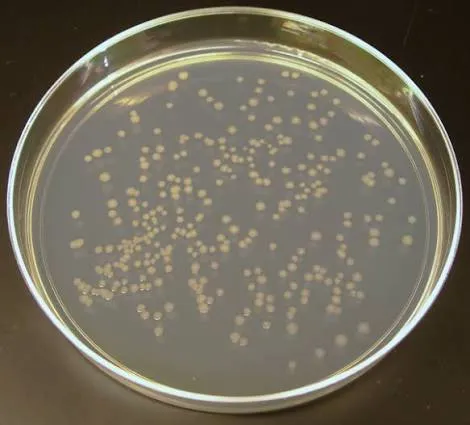
- Colony growth appearing on an uninoculated (control) plate
- Discoloration or unusual odour before use
- Condensation build-up inside sealed packaging
- Soft spots, mould patches, or an uneven surface texture
How to handle it:
- Never use a plate that shows any pre-existing growth — discard it immediately and log the batch number.
- Store plates correctly — most ready-to-use plates need refrigeration between 2–8°C and should be brought to room temperature before inoculation.
- Run regular control plates alongside test samples to catch contamination sources early, whether from the media itself, the environment, or handling technique.
- Report recurring batch issues to the manufacturer — a credible supplier will investigate and provide traceability data.
- Maintain proper aseptic technique during inoculation, since a large share of “plate contamination” actually originates from handling, not the plate itself.
Sterility isn’t a one-time checkbox; it’s a chain that starts at manufacturing and only stays intact if storage and handling are equally disciplined.
How to Prepare or Select the Right Agar Plate for Reliable Results?
Choosing the correct agar plate comes down to matching the medium to your diagnostic goal:
- For general bacterial isolation → Nutrient agar
- For clinical pathogen identification and haemolysis testing → Blood agar
- For Gram-negative, enteric organism isolation → MacConkey agar
- For fastidious respiratory pathogens → Chocolate agar
- For targeted isolation from mixed samples → Selective/enrichment agar
Beyond selecting the right type, labs should also evaluate their supplier on a few practical factors: consistency across batches, certification (CDSCO compliance is non-negotiable for Indian diagnostic labs), clean room manufacturing standards, cold-chain packaging for transport, and responsive technical support when something looks off.
It’s also worth remembering that agar plates rarely work in isolation — they’re one part of a larger sample collection and testing workflow. The same rigour that goes into selecting a reliable agar plate should extend to your blood collection tubes and containers. If your lab is also reviewing its sample collection disposables, our range of blood collection tubes, including the K3 EDTA blood collection tube and our Cell-Free DNA tubes, are manufactured to the same clean room and international material guideline standards. You may also find our insight on what a clot activator is and how it works useful if you’re standardising your pre-analytical workflow end to end.
Conclusion
Agar plates might look like a simple lab consumable, but they sit at the very foundation of accurate microbiological diagnosis. Choosing the right type, verifying quality before use, staying alert to sterility red flags, and sourcing from a manufacturer with real clean room discipline can be the difference between a reliable result and a repeated test.
At Nasmed Diagnostics Pvt. Ltd., our directors Kush Patel and Suril Shah lead a team of skilled technicians and quality experts committed to exactly this standard — CDSCO certified, ISO 7 clean room manufacturing (Class 10,000), and a track record of contamination-free, dependable diagnostic disposables trusted by hospitals, clinics, and labs across India.
For queries on agar plates, blood collection tubes, or custom diagnostic lab disposables, reach out to our team:
📞 +91 79908 01393 💬 WhatsApp: +91 74908 06241 📧 info@nasmeddiagnostic.com 📍 Survey No 282 (Old Block No 213 Paiki), Nandoli, Gandhinagar, Gujarat 382115, India
Frequently Asked Questions
1. What is the shelf life of a typical agar plate?
- Most ready-to-use agar plates have a shelf life of 4–8 weeks when stored correctly at 2–8°C, though this varies by formulation. Always check the manufacturer’s expiry date rather than assuming a standard timeline.
2. Can agar plates be reused after autoclaving?
- No. Agar plates are single-use consumables. Once inoculated or exposed, they should be autoclaved for safe disposal, not reused for a fresh culture.
3. Why does my agar plate show growth even without inoculation?
- This typically points to a sterility failure, either during manufacturing, storage, or from contaminated packaging. It should be treated as a defective batch and reported.
4. What’s the difference between selective and differential agar plates?
- Selective agar plates inhibit unwanted organisms to isolate a target species, while differential agar plates allow multiple organisms to grow but help distinguish them visually — for example, through colour change or haemolysis pattern.
5. How should agar plates be stored before use?
- They should be kept refrigerated (typically 2–8°C), stored upside down to prevent condensation from dripping onto the agar surface, and brought to room temperature before inoculation for accurate results.
6. Are all agar plates suitable for clinical diagnostic use?
- No. Diagnostic-grade agar plates should come from a certified manufacturer following recognised quality standards, such as CDSCO certification and clean room production, to ensure they’re safe and reliable for patient sample testing.
Ready to simplify your lab’s disposables sourcing? Reach the Nasmed Diagnostics Pvt Ltd team directly at +91 79908 01393, or message on WhatsApp at +91 74908 06241 / info@nasmeddiagnostic.com for a Free Product Consultation, the Blood Collection Tubes Cost Guide, or a same-week quote.
Contact Us