
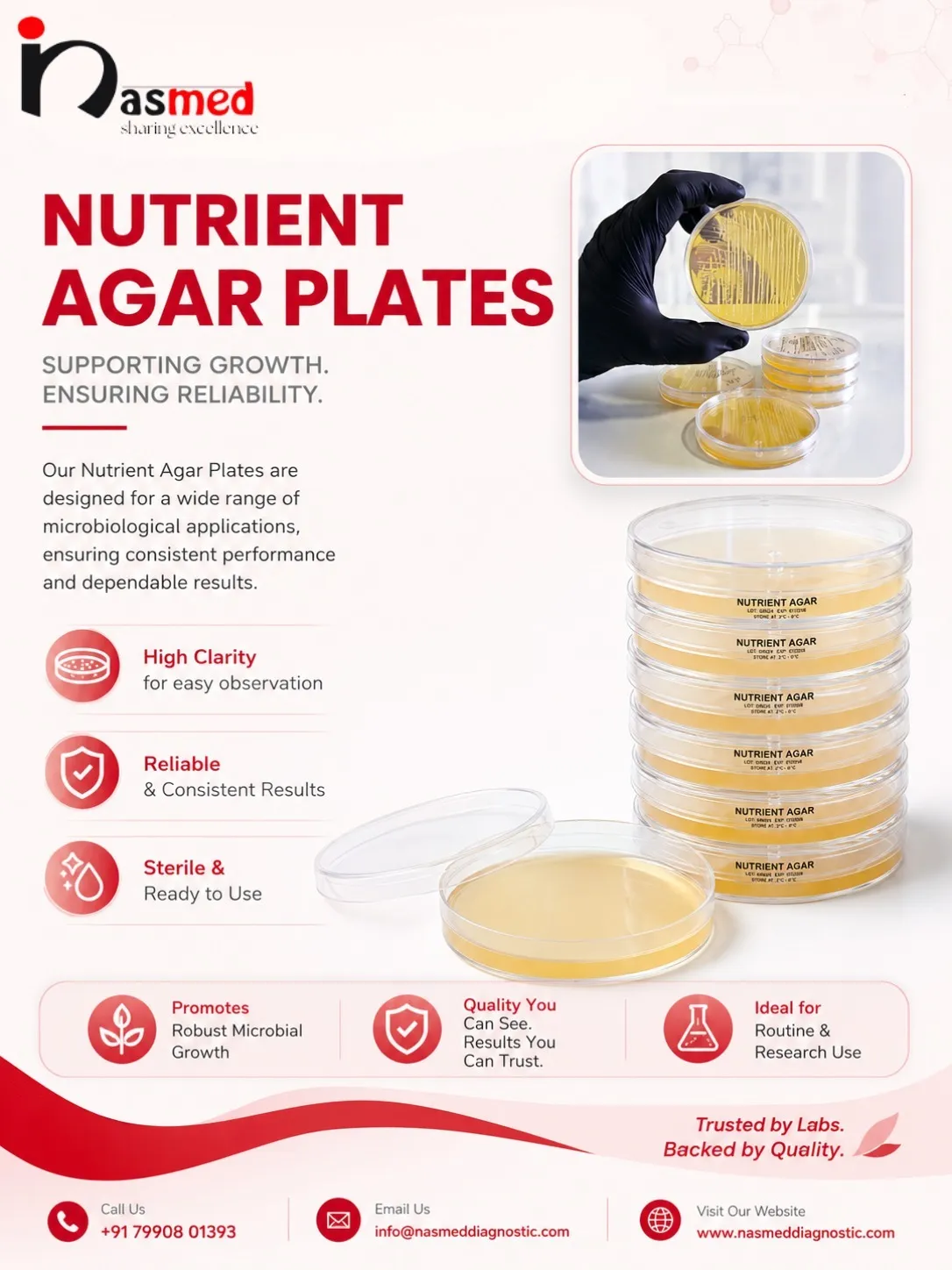
Why is Nutrient Agar used in microbiology
What Is the Difference Between Nutrient Agar and Blood Agar?
Nutrient Agar is a general-purpose medium used for routine cultivation of non-fastidious bacteria, while Blood Agar is enriched and supports a wider range of organisms while allowing hemolysis observation. Understanding why is Nutrient Agar used in microbiology helps laboratories choose the right medium for routine bacterial growth. Nasmed Diagnostic Pvt Ltd offers quality microbiology solutions for reliable laboratory testing. Contact us today to learn more about our products.
Why Is Nutrient Agar Used in Microbiology?
” Nutrient agar “is used in microbiology because it is a general-purpose growth medium — simple in composition, forgiving in preparation, and reliable enough to support the growth of a wide range of non-fastidious bacteria without favouring one organism over another.
If you have spent any time around a diagnostic lab in India, you have probably watched a technician pour a batch of this pale amber medium into Petri plates first thing in the morning, almost as a ritual before the day’s samples arrive. It is one of those unglamorous workhorses that keeps a microbiology bench running — and understanding why it is used, and where its limits lie, matters for anyone setting up or auditing a lab’s sample workflow, from a small pathology clinic in Indore to a NABL-accredited hospital lab in Chennai.
This matters beyond the microbiology bench too. Labs that run culture and sensitivity tests alongside routine biochemistry and haematology work depend on consistent, good-quality consumables at every stage — including the blood collection tubes and urine containers used to bring samples in before they ever reach a culture plate. Poor pre-analytical handling upstream (haemolysed samples, contaminated containers) is often what shows up downstream as an unreliable culture result.
What Is Nutrient Agar?
Nutrient agar is a basic, non-selective, non-differential culture medium used to cultivate a broad range of bacteria that do not have complex nutritional demands. It is one of the oldest and most widely taught media in microbiology, and it remains a staple in diagnostic, teaching, and quality-control labs across India.
Key defining characteristics:
- General-purpose medium — supports growth of most non-fastidious, heterotrophic bacteria rather than targeting a specific species
- Non-selective — it does not inhibit the growth of any particular group of organisms, so multiple species can grow side by side on the same plate
- Non-differential — it does not distinguish between organisms based on colour change, gas production, or fermentation, unlike media such as MacConkey or blood agar
- Simple, low-cost formulation — made from just a handful of ingredients, which keeps batch-to-batch preparation straightforward
- Available as agar plates, slants, or stabs — the same base formulation is used in different physical forms depending on the application
In an Indian diagnostic lab, nutrient agar typically shows up in three places: as a first isolation medium before an organism is subcultured onto a selective medium, as a maintenance medium for stock cultures, and as a teaching tool in microbiology training labs attached to hospitals and colleges.
Working Principle of Nutrient Agar
The working principle is straightforward: nutrient agar supplies the basic nutrients — carbon, nitrogen, vitamins, and trace elements — that most bacteria need for growth, while agar itself acts purely as a solidifying agent with no nutritional role of its own.
Here is how it plays out in practice, step by step:
- Peptone and beef extract dissolve into the medium, releasing amino acids, peptides, and organic nitrogen that bacteria use as building blocks for proteins and enzymes
- Sodium chloride maintains osmotic balance, keeping the internal environment of bacterial cells stable so they do not lyse or shrink
- Agar, derived from red algae, sets the liquid into a firm gel once it cools below roughly 40°C, without being metabolised by the growing bacteria
- The sample is streaked or inoculated onto the set surface, and individual cells begin dividing wherever nutrients and moisture are sufficient
- Incubation at 35–37°C for 18–24 hours allows visible colonies to form as bacterial numbers multiply from a single cell into millions
- Colony morphology, colour, and texture are then read by the technician to guide the next step — usually a Gram stain or subculture onto a selective medium
Because the medium does not select for or against any organism, what grows on the plate is largely a reflection of what was present in the original sample — which is exactly why sample collection quality upstream, using sterile blood collection tubes and properly sealed containers, has such a direct bearing on what a microbiologist eventually reads on that plate.
Composition & Material Specifications
| Component | Material/Additive | Function | Standard Reference |
|---|---|---|---|
| Peptone | Enzymatic digest of animal/plant protein | Source of nitrogen, amino acids, peptides | ISO 11133 guidance on culture media |
| Beef extract / yeast extract | Water-soluble extract | Supplies B-vitamins, nucleotides, minerals | Pharmacopoeial-grade raw material |
| Sodium chloride (NaCl) | Inorganic salt | Maintains osmotic balance | USP/IP reagent grade |
| Agar | Polysaccharide from red algae | Solidifying/gelling agent, non-nutritive | ISO 11133 physical performance criteria |
| Distilled water | Solvent | Dissolves and disperses all components | Lab-grade purified water |
Practical material-grade notes from routine lab use:
- Commercial nutrient agar is usually supplied as a dehydrated powder that is reconstituted, autoclaved, and poured — this keeps composition consistent between batches
- Final pH is typically standardised to around 7.0–7.4, since most clinically relevant bacteria grow best near neutral pH
- Agar concentration generally sits between 1.5–2% w/v, enough to give a firm gel that resists tearing during streaking
- Quality-controlled batches are tested against reference strains (such as E. coli and S. aureus) before being released for diagnostic use, in line with the performance-testing approach described in ISO 11133 for culture media in the microbiology of the food chain and clinical settings, which is widely referenced for media quality assurance
Properties & Storage Conditions
| Property | Specification | Storage Requirement |
|---|---|---|
| Shelf life (poured plates) | 2–4 weeks, refrigerated | 2–8°C, sealed to prevent drying |
| Shelf life (dehydrated powder) | 2–5 years, unopened | 15–25°C, dry, away from direct light |
| pH range | 6.8–7.4 | Verified at time of preparation |
| Moisture sensitivity | High for dehydrated powder | Airtight container, desiccant recommended |
| Light sensitivity | Low to moderate | Store poured plates in the dark or low light |
| Gel strength/firmness | Firm, non-tearing gel at 1.5–2% agar | Avoid freezing, which fractures the gel matrix |
Handling and storage best practices, adjusted for Indian lab conditions:
- In humid coastal cities like Mumbai and Chennai, dehydrated powder should be kept in airtight containers with desiccant, since ambient humidity accelerates caking and reduces shelf life
- In dry, high-heat cities such as Jaipur and Ahmedabad, poured plates dehydrate faster if refrigeration is inconsistent, so plates should be used within one to two weeks of pouring during summer months
- Labs in hill or cooler-climate cities like parts of Chandigarh benefit from more stable refrigerator temperatures, but should still avoid placing plates near the freezer compartment
- Always label the preparation date on poured batches — a habit many experienced lab managers in Pune and Hyderabad enforce strictly, since expired media is one of the more common reasons for unreliable culture growth
- Invert plates during storage (agar side up, lid down) to reduce condensation dripping onto the growth surface
Expected Results & Sample Accuracy
Yes, when prepared and stored correctly, nutrient agar reliably supports visible bacterial growth within 18–24 hours for the majority of clinically encountered, non-fastidious organisms — though it will not grow fastidious pathogens that need enriched media.
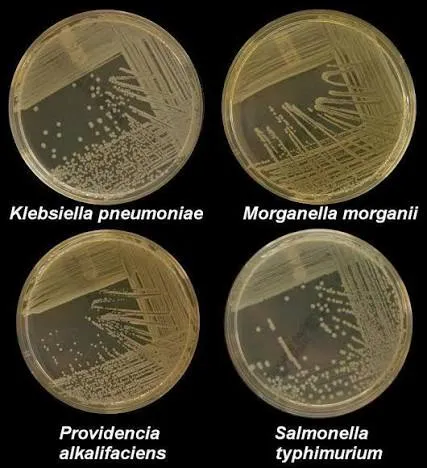
Quality outcomes you can expect from a properly maintained batch:
- Consistent colony formation for common organisms such as E. coli, Staphylococcus, Bacillus, and Pseudomonas species
- Reproducible colony size and morphology across replicate plates from the same batch, which supports basic comparative reading
- No false inhibition of growth, since the medium contains no selective or inhibitory agents
- Reliable performance when quality-checked against reference strains, consistent with the growth-support criteria outlined in ISO 11133
- Predictable behaviour when subcultured onto secondary selective or differential media for identification
It is worth being clear that nutrient agar alone does not confirm species identity — it is a first step. Confirmatory testing (biochemical panels, selective media, or automated identification systems) still follows, and regulatory frameworks such as those referenced by the Central Drugs Standard Control Organisation apply to the broader diagnostic devices and consumables used across the sample pathway, from collection to culture.
Recommended Use & Applications
- Primary isolation of bacteria from clinical, environmental, or food samples before selective subculturing
- Maintenance of stock cultures and reference strains in teaching and quality-control labs
- Environmental monitoring — swabs from lab surfaces, water samples, and air-settle plates in cleanroom validation
- Undergraduate and postgraduate microbiology training, where a forgiving, general-purpose medium helps students learn streaking and colony-reading technique
- Preliminary screening step in food and water testing labs before pathogen-specific confirmation
- Basic antimicrobial susceptibility groundwork, where isolated colonies are picked for further disk-diffusion testing
A mid-sized diagnostic centre in Surat, for instance, typically runs nutrient agar as a first-pass plate for urine and wound swab cultures each morning, reserving blood agar and MacConkey plates for samples that show growth and need further characterisation — a routine that keeps reagent costs down without compromising diagnostic value on the first pass.
Limitations to Be Aware Of
- Not suitable for fastidious organisms such as Streptococcus pneumoniae or Haemophilus influenzae, which need enriched media like blood or chocolate agar
- Provides no differentiation between organisms, so it cannot be used alone to distinguish, for example, lactose fermenters from non-fermenters
- Sensitive to storage temperature — plates left at room temperature for extended periods dry out and lose gel integrity
- Dehydrated powder is hygroscopic and clumps if exposed to humid air, affecting reconstitution accuracy
- Overcrowded inoculation can mask individual colony morphology, complicating interpretation
- Not appropriate as a standalone medium for anaerobic organisms without supplementary conditions
Advantages & Disadvantages — A Balanced View
| Advantages | Disadvantages |
|---|---|
| Simple, low-cost formulation | Does not support fastidious organisms |
| Supports a broad range of bacteria | No selective or differential capability |
| Long shelf life as dehydrated powder | Poured plates degrade faster in humid climates |
| Easy to prepare and standardise | Requires careful pH and sterility control during preparation |
| Widely available and well-documented | Colony overcrowding can obscure interpretation |
Practical tips to work around these limitations:
- Pair nutrient agar with a selective medium (MacConkey, blood agar) for the same sample so you get both broad recovery and differentiation
- Standardise inoculum volume during streaking to avoid overcrowded plates
- Track batch expiry dates and rotate stock, particularly in labs handling high sample volumes across cities like Bangalore and Delhi
- Validate each new batch against known reference strains before releasing it for diagnostic use
Sourcing Reliable Lab Consumables Alongside Culture Media
Culture media quality is only half the picture — the other half is how the original sample reached the lab. A urine sample collected in a poorly sealed container, or a blood sample drawn into a tube with inconsistent additive quality, can compromise results long before a plate is ever poured. This is where Nasmed Diagnostics fits into the broader lab workflow, even though it is not a manufacturer of culture media itself.
Nasmed Diagnostics Pvt. Ltd., based in Gandhinagar, Gujarat, manufactures vacuum blood collection tubes, non-vacuum tubes, gel lithium heparin tubes, micro/paediatric tubes, cell-free DNA tubes, and urine containers in a “CDSCO Certified”, “ISO 7 Clean Room” facility, led by directors Kush Patel and Suril Shah. For labs that run microbiology alongside routine biochemistry and haematology — which describes most diagnostic centres in India — the pre-analytical consumables and the culture media work as two links in the same chain.
A diagnostic centre in Vadodara that recently reviewed its pre-analytical process found that a meaningful share of its “no growth” or ambiguous culture results traced back not to the agar itself, but to sample containers that had been improperly sealed during transport — a reminder that consumable quality upstream of the culture plate deserves as much scrutiny as the medium itself.
If you are evaluating diagnostic lab disposables — whether it is blood collection tubes for haematology and biochemistry, or containers for microbiology and urinalysis samples — Nasmed Diagnostics can be reached for a Free Product Consultation at +91 79908 01393, on WhatsApp at +91 74908 06241, or via nasmeddiagnostic.com and its . Lab managers researching consumable standards can also browse the company’s insights section for related reading on sample handling.
Frequently Asked Questions
1. Why is nutrient agar called a general-purpose medium?
- Because it supplies only basic nutrients without selecting for or against any organism, allowing most non-fastidious bacteria to grow on it, regardless of species.
2. Can nutrient agar identify a specific bacterial species?
- No. It supports growth but does not differentiate species — identification requires biochemical tests, selective media, or automated systems after initial growth on nutrient agar.
3. How long does nutrient agar take to show bacterial growth?
- Most common bacteria produce visible colonies within 18–24 hours of incubation at 35–37°C, though slower-growing organisms may take longer.
4. What is the difference between nutrient agar and blood agar?
- Nutrient agar is a basic, non-enriched medium, while blood agar contains added blood components that support fastidious organisms and allow haemolysis patterns to be observed.
5. How should nutrient agar plates be stored in Indian lab conditions?
- Poured plates should be refrigerated at 2–8°C in sealed sleeves, with humid regions requiring extra attention to prevent condensation and drying.
6. Is nutrient agar used for water and food testing as well as clinical samples?
- Yes, it is commonly used as a preliminary isolation medium in environmental, food, and water testing before organism-specific confirmation.
7. Does the quality of blood or urine collection affect microbiology culture results?
- Yes — samples collected in properly sterile, correctly additive-treated containers reduce contamination risk and give more reliable culture results than poorly handled samples.
Ready to simplify your lab’s disposables sourcing? Reach the Nasmed Diagnostics team directly at +91 79908 01393, or message on WhatsApp at +91 74908 06241 / info@nasmeddiagnostic.com for a Free Product Consultation, the Blood Collection Tubes Cost Guide, or a same-week quote.Contact Us