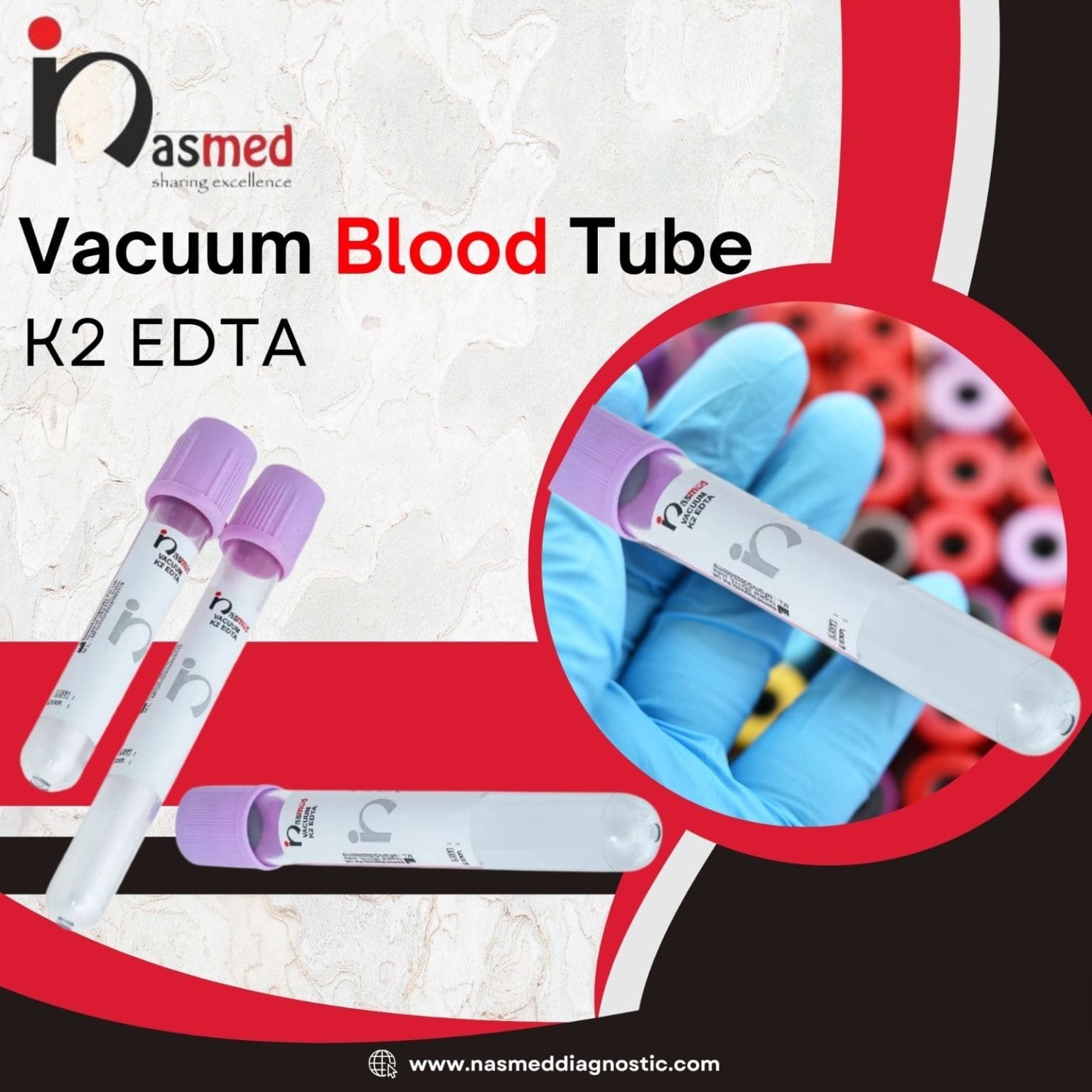
Advanced Sodium Fluoride Blood Collection Tubes for Clinical Glucose Testing: Nasmed Diagnostics
For the last twenty years, Sodium Fluoride Blood Collection Tubes for Glucose Testing have become increasingly essential as analysis and pathology testing have quickly advanced throughout worldwide medical systems. From central hospital labs to high-throughput diagnostic networks, current laboratories are expected to deliver precise findings more rapidly than ever before. This shift is apparent not just in advanced healthcare regions like the USA and UK, but also in places like India and other developing diagnostic centers, where testing volumes continue to climb steadily and the need for reliable pre-analytic solutions is growing.
Collection tubes are therefore more than just disposable items—they are fundamental analytical instruments. Among these, Sodium Fluoride Blood Collection Tubes play a critical role in sugar testing, enabling labs to maintain sample integrity from withdrawal to analysis across various clinical settings.
Evolving Requirements of Contemporary Analytical & Health Labs
In everyday analytical lab tasks, professionals encounter a new spectrum of challenges beyond standard testing.
- Test volumes are rising due to the prevalence of lifestyle ailments and proactive wellness checks
- Turnaround time demands are shortening
- Global quality standards are influencing even domestic labs
- Regulatory scrutiny and export requirements for analytical disposables are increasing
Facility managers and lab leads across Europe and the Middle East frequently require disposables that meet consistent quality expectations. In contrast, labs in India and Southeast Asia must balance cost-effectiveness with dependability. These pressures make standardized, reliable sample-collection systems crucial for maintaining operational stability.
What is a Sodium Fluoride Blood Collection Tube?
A Blood Collection Tube containing Sodium Fluoride is engineered explicitly for blood sugar assessment. In practical laboratory terms, clinicians use this tube during venous blood withdrawal to keep sugar levels constant from the moment of collection through analysis.
In hospital and pathology lab settings, sugar samples may not always reach analyzers immediately. Sodium fluoride functions by retarding glycolysis, the natural method by which blood cells utilize sugar. This allows labs to secure results that truly reflect the patient’s blood sugar levels at the time of collection, rather than after deterioration during transit or waiting periods.
Why Are Collection Tubes Vital for Accurate Blood Sample Collection?
Precise diagnoses start with sample soundness. Blood collection tubes are designed to:
- Sustain the chemical stability of blood elements
- Guard against outside impurities
- Ensure consistent sample volume and additive proportions
For labs involved in international partnerships or export-linked analysis, uniformity in sample handling is paramount. Even minor fluctuations in tube quality can lead to measurable differences in outcomes, particularly for sensitive measures like sugar.
The Function of Collection Tubes in Dependable Test Results
Seasoned lab professionals recognize that selecting the wrong tube can cause a chain reaction.
Using an unsuitable tube for sugar testing can result in:
- Lower precision due to sugar degradation
- Higher rates of necessary re-testing
- Reporting delays
- Erosion of practitioner and patient trust
In real-world situations, a rejected sample necessitates recalling the patient, repeating the draw, and boosting workload. Dependable Sodium Fluoride Blood Collection Tubes help to reduce these issues by preserving sample quality from the very start.
Concerns Regarding Safety, Sterility & Patient Care
Safety is a mutual obligation among producers, phlebotomists, and laboratory teams.
High-quality collection tubes are manufactured under regulated conditions to guarantee:
- Sterile interior surfaces
- Seals that prevent leakage and exposure
- Smooth interior walls that minimize clotting artifacts
For phlebotomists, ease of use and secure closure diminish occupational hazards. For patients, a single, correctly collected sample lessens discomfort and the need for repeat procedures.
Compatibility with Modern Analytical Gear
Contemporary labs utilize automated analyzers, barcode systems, centrifuges, and sample transport networks. Collection tubes must fit seamlessly into these processes.
Sodium Fluoride Blood Collection Tubes are typically made to work with:
- Automated chemistry analyzers
- Standard laboratory centrifuges
- Pneumatic and manual transport mechanisms
This interoperability is critical in global lab environments, including diagnostic networks in Southeast Asia and large hospital groups in Australia and Canada.
Manufacturing Excellence, Additives & Tube Uniformity
From a production standpoint, consistency is just as important as the makeup.
Blood collection tubes may contain various additives depending on the intended analysis—EDTA for blood counts, gel separators for serum, heparin for plasma, and fluoride for sugar stabilization. Each additive must be measured precisely and spread uniformly.
Manufacturing quality checks confirm:
- Uniform additive concentration
- Consistent vacuum strength
- Stable tube dimensions
These elements help labs achieve repeatable, trustworthy test outcomes across different batches and shipments.
Considerations for Storage, Shelf Life & Shipping
Storage and distribution are often overlooked yet critically important elements.
In areas with high heat and humidity, such as India and parts of Africa, tube longevity during storage is vital. Likewise, exported shipments to markets such as the UAE, Saudi Arabia, or Latin America might involve lengthy transit durations.
Properly manufactured tubes are engineered to:
- Maintain additive stability throughout their shelf life
- Endure temperature fluctuations during transit
- Preserve vacuum integrity until utilized
This dependability ensures uninterrupted lab operations across various regions.
Cost-Effectiveness for Labs & Healthcare Providers
While purchasing departments frequently evaluate the initial outlay, experienced directors focus on long-term value.
Reliable collection tubes contribute to financial prudence by:
- Decreasing sample rejection rates
- Minimizing repeat collections and re-testing
- Supporting predictable inventory planning
Over time, consistent consumable quality leads to smoother operations and better utilization of laboratory assets.
Adherence to Regulations, Standards & Export Readiness
For labs and distributors involved in global supply chains, regulatory compliance is key.
Hospitals, group purchasing bodies, and diagnostic networks increasingly expect disposables that align with global acceptance criteria. Manufacturers must prepare for buyer assessments, documentation reviews, and performance evaluations.
Export-ready collection tubes foster confidence among suppliers, distributors, and healthcare organizations without requiring labs to sacrifice quality or safety.
Incorporation into Hospital & Lab Operations
Practically speaking, Sodium Fluoride Blood Collection Tubes fit easily into current procedures.
They are routinely used in:
- Outpatient and clinic collection areas
- Hospital lab phlebotomy divisions
- Large diagnostic chains and reference labs
Their standardized handling permits personnel to move between departments or sites without complex retraining.
Practices for Training, Handling & Disposal
Ease of use promotes safer laboratory environments.
Instruction for blood collection tubes generally covers:
- Correct sequence of draws
- Gentle mixing methods
- Safe disposal in biomedical waste systems
Well-designed tubes simplify training for new technicians and medical students while supporting compliance with waste-management regulations.
Why Selecting the Appropriate Manufacturer Matters (Worldwide View)
From a global analysis perspective, the company behind the product plays a crucial role.
An experienced manufacturer understands:
- Consistency from one batch to the next
- Requirements for regulatory and export paperwork
- Stable supply chain management
- Ongoing quality oversight
For both distributors and labs, this dependability reduces operational unpredictability and supports enduring collaborations.
About Nasmed Diagnostic Pvt Ltd
Nasmed Diagnostic Pvt Ltd is a specialized producer of blood collection tubes serving both the Indian and international diagnostic sectors. Focusing on manufacturing consistency, quality assurance, and practical laboratory needs, the company supports analytical workflows across varying healthcare settings.
Nasmed Diagnostic creates its offerings with an understanding of real-world lab functions, export logistics, and evolving healthcare expectations. Further details about the company and its analytical disposables are available at 👉 https://www.nasmeddiagnostic.com/
Summary
Accurate diagnostics commence long before a sample reaches an analyzer. Sodium Fluoride Blood Collection Tubes play an essential role in maintaining sample stability, supporting reliable findings, and safeguarding patient confidence.
For labs, hospitals, and diagnostic networks operating in demanding settings, the correct collection tube is a core investment in excellence, security, and efficiency. Careful selection of both the product and its manufacturer helps healthcare systems deliver reliable diagnostic outcomes globally.
Key Insights
- Diagnostic Accuracy: Stable sugar measurement begins at the point of collection
- Sample Safety & Sterility: Appropriate tube design protects patients and staff
- Workflow Effectiveness: Compatible with modern lab platforms
- Cost Control for Labs: Fewer re-tests and rejected samples
- Increasing Worldwide Need: Crucial consumables for advancing analysis
FAQS
1. Why are Sodium Fluoride Blood Collection Tubes used for glucose testing?
- They help slow glucose breakdown in blood samples, supporting more accurate results during routine lab workflows.
2. How should these tubes be stored in laboratory settings?
- They should be stored according to manufacturer guidance, away from excessive heat and humidity, to maintain additive stability.
3. Are these tubes compatible with automated analysers?
- Yes, they are designed to integrate with standard laboratory analysers and centrifuges used globally.
4. What common mistakes affect glucose sample accuracy?
- Using incorrect tubes, delayed processing, or improper mixing can all impact test reliability.
#BloodCollectionTube #DiagnosticConsumables #PathologyLab #MedicalDiagnostics #NasmedDiagnostic #IVDProducts #HealthcareManufacturing #GlobalDiagnostics #SodiumFluorideBloodCollectionTubes