
Sodium Fluoride Blood Collection Tube — Uses, Specifications & Buying Guide
Accurate glucose testing depends on one thing labs often overlook: the tube the blood goes into. If glucose in a blood sample keeps breaking down after collection (a process called glycolysis), the reported sugar level can be falsely low — leading to missed or delayed diagnoses, especially in diabetes screening. The Sodium Fluoride Blood Collection Tube solves this problem at the source.
Manufactured by NASMED Diagnostics, a trusted name in in-vitro diagnostic consumables, this tube is built specifically to keep glucose readings stable from the moment blood is drawn to the moment it reaches the analyzer. This guide covers what the tube is, how it works, its technical specifications, correct usage, and how it compares with other blood collection tubes — so labs, hospitals, and diagnostic centres can make an informed, evidence-based buying decision.
What Is a Sodium Fluoride Blood Collection Tube?
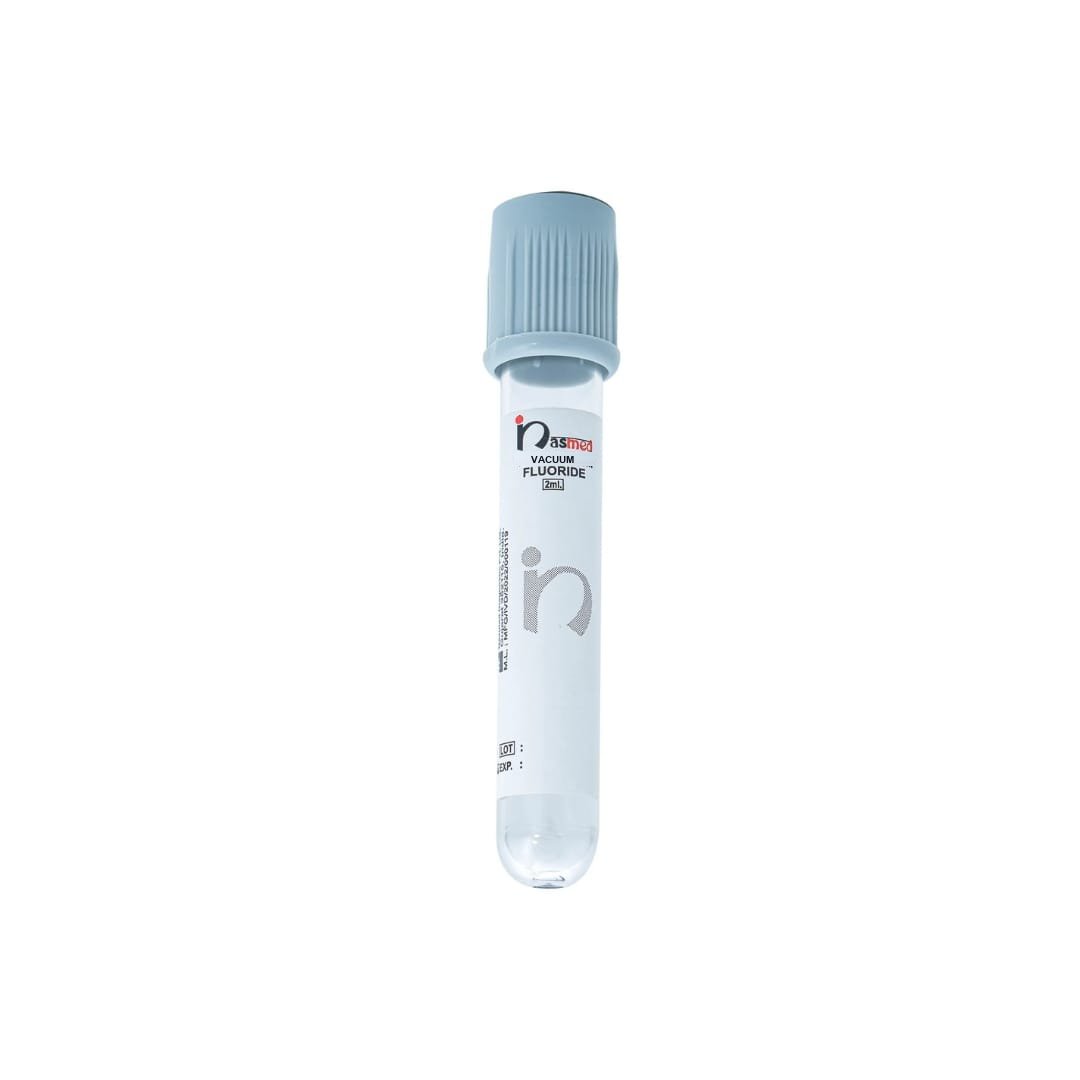
A Sodium Fluoride Blood Collection Tube is a vacuum-sealed, sterile tube coated internally with sodium fluoride (NaF), sometimes combined with an anticoagulant such as potassium oxalate or EDTA. It is identified by its light grey cap, the international colour code for glucose and lactate testing tubes.
The tube is primarily used for:
- Fasting and random blood glucose (FBS/RBS) tests
- Oral Glucose Tolerance Test (OGTT) during pregnancy and diabetes screening
- Lactate level testing
- Certain forensic and alcohol (BAC) testing panels, where fluoride prevents fermentation of the sample
How Does Sodium Fluoride Preserve Blood Glucose Levels?
Once blood leaves the body, red blood cells continue to metabolise glucose through glycolysis — even inside the collection tube. Left untreated, this can reduce measurable glucose by 5–10% per hour at room temperature, distorting results.
Sodium fluoride works as an enzyme inhibitor. It blocks enolase, a key enzyme in the glycolysis pathway, effectively “freezing” the glucose level in the sample. This keeps results accurate even if the sample sits for a few hours before it is processed — a common, real-world scenario in labs handling high patient volumes or samples transported from collection centres.
Key Specifications — NASMED Sodium Fluoride Blood Collection Tube
| Specification | Details |
|---|---|
| Cap Colour | Grey |
| Additive | Sodium Fluoride (with Potassium Oxalate/EDTA) |
| Tube Capacity | 2 mL / 3 mL (vacuum-drawn) |
| Tube Size | 13 x 75 mm |
| Material | Medical-grade PET/Glass, non-reactive |
| Collection Type | Vacuum-assisted (evacuated tube) |
| Primary Use | Glucose, lactate, and alcohol testing |
| Inversions Required | 6–8 gentle inversions immediately after draw |
| Centrifuge Setting | 3,500–4,000 RPM for 10 minutes |
| Shelf Life | As per batch expiry printed on pack |
| Sterility | Individually sterile, tamper-evident packaging |
| Pack Size | Available in bulk pack configurations |
For full pricing and pack sizes, check the specifications printed on the pack or reach out to our team for the latest details.
Step-by-Step: How to Use a Sodium Fluoride Blood Collection Tube?
- Verify the tube — Check that the vacuum seal is intact and the tube is within its expiry date.
- Prepare the site — Clean the venipuncture site with an antiseptic swab and allow it to dry.
- Draw the sample — Insert the needle and allow the vacuum to draw blood to the tube’s calibrated fill line. Under-filling changes the blood-to-additive ratio and can affect results.
- Mix immediately — Gently invert the tube 6–8 times. Do not shake, as this can cause haemolysis.
- Label and transport — Label the tube with patient details as per lab protocol and transport at room temperature unless otherwise specified.
- Centrifuge (if required) — Spin at 3,500–4,000 RPM for 10 minutes before separating plasma for analysis.
- Analyse promptly — Even with fluoride preservation, timely processing is recommended for the most accurate results.
Sodium Fluoride Tube vs Other Blood Collection Tubes — Comparison Table
Choosing the right tube depends on the test being performed. Here’s how the Sodium Fluoride tube compares with other commonly used additive tubes from NASMED’s range:
| Feature | Sodium Fluoride Tube | Sodium Citrate 3.2% Tube | Sodium Citrate 3.8% Tube | Sodium Heparin Tube |
|---|---|---|---|---|
| Cap Colour | Grey | Light Blue | Light Blue | Green |
| Primary Additive | Sodium Fluoride ± Oxalate/EDTA | Sodium Citrate (3.2%) | Sodium Citrate (3.8%) | Sodium Heparin |
| Main Use | Glucose, lactate, alcohol testing | Coagulation studies (PT/APTT) | Coagulation & ESR (older protocol) | Plasma chemistry, STAT electrolytes |
| Mechanism | Inhibits glycolysis (enolase blocker) | Binds calcium to prevent clotting | Binds calcium to prevent clotting | Inhibits thrombin formation |
| Inversions Needed | 6–8 | 3–4 | 3–4 | 8–10 |
| Common Dept. | Biochemistry / Endocrinology | Haematology / Coagulation Lab | Haematology / Coagulation Lab | Biochemistry / Emergency Lab |
Not sure which tube fits your test panel? Browse the complete range of collection tubes — our team can guide you to the right additive for your lab’s requirements.
Why Choose NASMED Sodium Fluoride Blood Collection Tubes?
- Consistent Quality: Manufactured under controlled conditions with batch-wise quality checks, so lab-to-lab and draw-to-draw results stay reliable.
- Vacuum-Calibrated Fill: Precise vacuum draw ensures the correct blood-to-additive ratio every time, reducing pre-analytical errors.
- Trusted by Diagnostic Professionals: Used by pathology labs and hospitals that depend on accurate glucose reporting for diabetes management and screening programs.
- Regulatory Compliance: Specimen collection tubes in India fall under the Medical Devices Rules, 2017, administered by the Central Drugs Standard Control Organisation (CDSCO), Ministry of Health & Family Welfare, Government of India — you can review the official classification on the CDSCO government portal.
- Full Product Range: Sodium Fluoride tubes are part of a wider blood collection tube portfolio, covering nearly every additive requirement a modern lab needs.
Explore more about NASMED and our manufacturing standards on our homepage.
Storage, Handling & Safety Guidelines
- Store tubes in a cool, dry place away from direct sunlight, ideally between 4°C–25°C.
- Do not use a tube past its printed expiry date, as vacuum strength and additive efficacy can degrade.
- Always dispose of used tubes as biomedical waste, following your facility’s infection-control protocol.
- Under-filled or over-filled tubes should be discarded and redrawn, as incorrect blood-to-additive ratios can skew glucose results.
Frequently Asked Questions
1. What is a sodium fluoride blood collection tube used for?
- It is primarily used to collect blood for glucose, lactate, and certain alcohol (BAC) tests. The sodium fluoride additive stops glucose from breaking down after the blood is drawn, so lab results reflect the patient’s true blood sugar level rather than a falsely lowered one.
2. Why is the cap grey on this tube?
- Grey is the internationally recognised cap colour for tubes containing sodium fluoride and oxalate/EDTA combinations, mainly used for glucose testing. Colour-coding helps phlebotomists and lab staff quickly identify the correct tube for each test without reading the label every time.
3. How many times should the tube be inverted after collection?
- Gently invert the tube 6 to 8 times immediately after the draw. This mixes the sodium fluoride additive evenly with the blood, ensuring glycolysis is inhibited throughout the sample rather than only near the additive.
4. Can sodium fluoride tubes be used for coagulation tests like PT or APTT?
- No. Sodium fluoride tubes are not suitable for coagulation testing. For PT/APTT and other clotting studies, a sodium citrate tube (light blue cap) should be used instead — see the Related Products section below for NASMED’s citrate tube options.
5. How long can a blood sample stay stable in a sodium fluoride tube?
- Sodium fluoride can preserve glucose levels reasonably well for several hours at room temperature, which is why it is preferred over plain tubes for glucose testing. However, best practice is still to process and analyse samples as soon as possible for maximum accuracy.
6. Is this tube available for bulk or institutional orders?
- Yes. NASMED supplies sodium fluoride blood collection tubes in bulk pack sizes suited for hospitals, diagnostic chains, and pathology labs. Contact the NASMED team directly for available pack options and a bulk quote.
Get in Touch
Need help selecting the right blood collection tubes for your lab, or want to place a bulk order? Contact the NASMED Diagnostics team — we’re happy to assist with product specifications, sample requests, and pricing.