
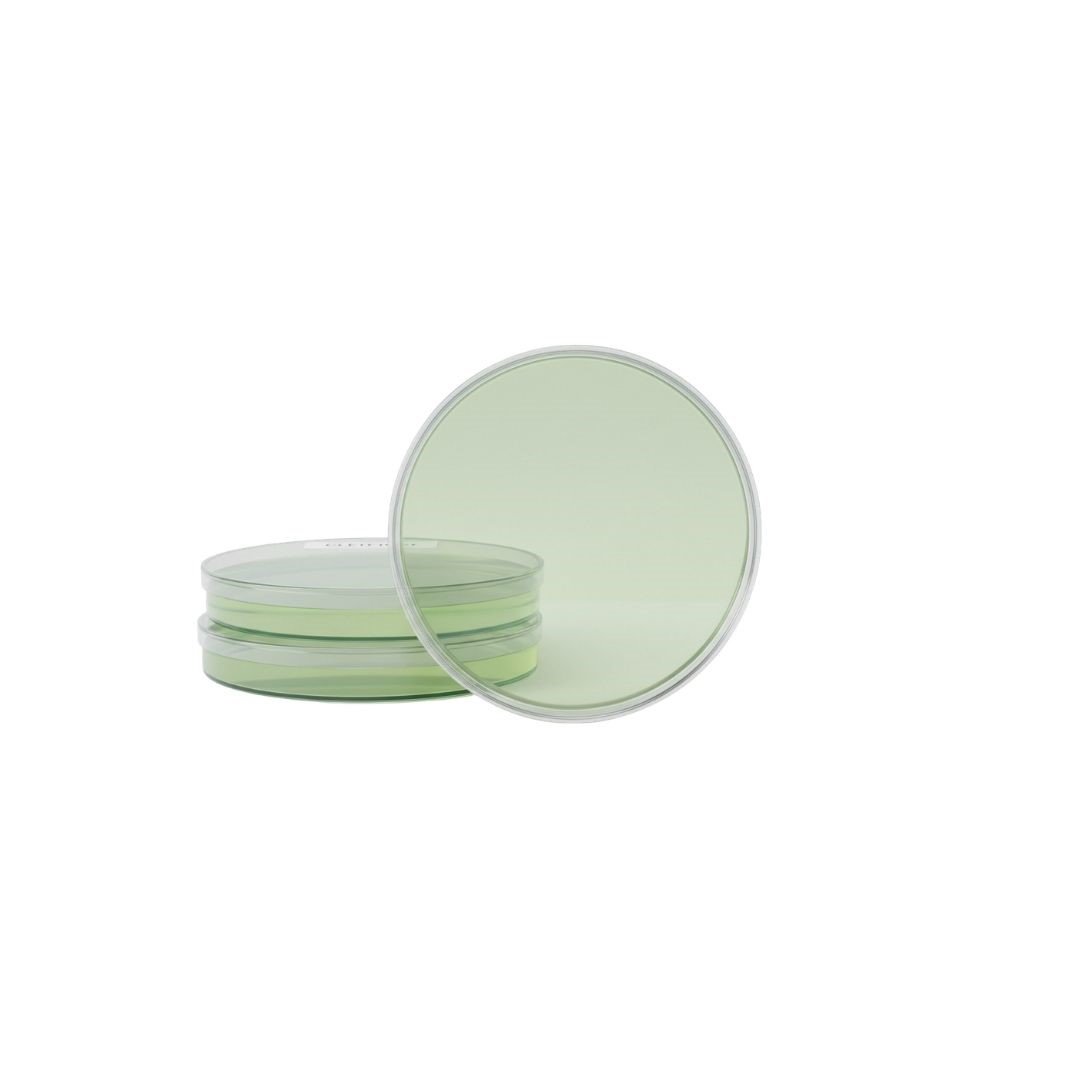
CLED Agar Plates – Cystine Lactose Electrolyte Deficient Medium for Urine Culture
CLED Agar Plates (Cystine Lactose Electrolyte Deficient Agar) are ready-to-use microbiology culture plates used in pathology and diagnostic labs to isolate, enumerate, and presumptively identify bacteria that cause urinary tract infections (UTIs). Because the medium is electrolyte-deficient, it stops Proteus species from swarming, giving labs clean, well-separated, countable colonies for accurate urine culture and sensitivity (C&S) reporting.
Nasmed Diagnostic supplies laboratory-grade CLED Agar Plates to hospitals, pathology labs, and diagnostic centres across India. Explore our full range on the microbiology culture media product page or visit the Nasmed Diagnostic to know more about our quality-assured diagnostic consumables.
What is CLED Agar?
CLED Agar (Cystine Lactose Electrolyte Deficient Agar) is a non-selective, differential culture medium developed specifically for urine microbiology. Unlike blood agar or MacConkey agar, CLED contains no sodium chloride or other electrolytes, which serves one important purpose: it prevents Proteus species from swarming across the plate. This allows technicians to see and count individual, isolated colonies of every organism present in a urine sample — a critical requirement for reliable colony counts (CFU/mL) in urine culture and sensitivity testing.
CLED Agar supports the growth of almost all urinary pathogens, both lactose-fermenting and non-lactose-fermenting, while its bromothymol blue pH indicator differentiates them by colour, making presumptive identification faster and easier for the microbiologist.
Composition & Formulation of CLED Agar
The standard formula (per litre) used in CLED Agar Plates is as follows:
| Ingredient | Quantity (g/L) | Function |
|---|---|---|
| Peptone / Gelatin peptone | 4.0 g | Nitrogen & nutrient source |
| Casein peptone | 4.0 g | Amino acids for bacterial growth |
| Meat extract (Lab-Lemco) | 3.0 g | Growth-promoting nutrients |
| Lactose | 10.0 g | Fermentable carbohydrate for differentiation |
| L-Cystine | 0.128 g | Promotes growth of cystine-dependent colonies |
| Bromothymol blue | 0.02 g | pH indicator (colour change on fermentation) |
| Agar | 15.0 g | Solidifying/gelling agent |
Approximate pH: 7.1 – 7.5 at 25°C. Appearance: Blue-green, clear gel in a 90 mm sterile petri dish.
Working Principle of CLED Agar
CLED Agar works on a simple fermentation-based colour reaction:
- Lactose-fermenting organisms (e.g. E. coli) produce acid, which turns the bromothymol blue indicator and surrounding medium yellow.
- Non-lactose-fermenting organisms (e.g. Proteus, Pseudomonas) do not acidify the medium, so colonies stay blue, green, or colourless.
- The absence of electrolytes removes the moisture film Proteus species need to swarm, keeping every colony discrete and countable.
Colony Interpretation Chart
| Organism | Colony Colour | Colony Appearance |
|---|---|---|
| Escherichia coli | Yellow | Flat, dry, opaque, yellow zone |
| Klebsiella / Enterobacter | Yellow | Large, mucoid, slimy |
| Proteus species | Blue / colourless | Translucent, non-swarming (unlike blood agar) |
| Pseudomonas aeruginosa | Green-blue | Irregular, may show pigment |
| Enterococcus faecalis | Yellow | Small, opaque, yellow-tinged |
| Staphylococcus saprophyticus | Deep yellow | Small, smooth, convex colonies |
Final species confirmation should always be verified with Gram staining, biochemical tests, or automated identification systems as per your lab’s SOP.
Applications & Uses of CLED Agar Plates
- Isolation and enumeration of bacteria from urine samples (urine culture & sensitivity)
- Presumptive identification of common uropathogens
- Colony counting for diagnosing significant bacteriuria (≥10⁵ CFU/mL)
- Screening for asymptomatic bacteriuria, especially in antenatal and paediatric patients
- Routine diagnostic microbiology in NABL-accredited and hospital-based laboratories
- Research and quality-control applications in clinical microbiology
CLED Agar vs Other Common Culture Media
Choosing the right culture media depends on the sample type and target organisms. Here’s how CLED Agar compares with two other widely used plates from our range:
| Parameter | CLED Agar | MacConkey Agar | Chocolate Agar |
|---|---|---|---|
| Primary use | Urine culture, prevents Proteus swarming | Isolation of Gram-negative enteric bacteria | Isolation of fastidious organisms (e.g. Haemophilus, Neisseria) |
| Selectivity | Non-selective, differential | Selective & differential (bile salts, crystal violet) | Non-selective, enriched |
| Electrolyte content | Deficient (by design) | Normal | Normal |
| Indicator | Bromothymol blue | Neutral red | None (enriched with lysed blood) |
| Ideal sample type | Urine | Stool, urine, wound swabs | Respiratory, genital, blood cultures |
Browse our complete range of culture media in the Agar Plates category to find the right media for every sample type your lab processes.
Product Specifications
| Plate Diameter | 90 mm (standard); other sizes available on request |
|---|---|
| Fill Volume | ~19 ± 2 g per plate |
| pH | 7.3 ± 0.2 |
| Colour | Blue-green, clear |
| Packaging | Sterile, sealed sleeves; standard pack of 10/20 plates |
| Usage | Single use only — for in-vitro diagnostic (IVD) & professional use |
| Customisation | Bulk/OEM & private-label packaging available |
Storage & Shelf Life
- Store in original packaging at 2–10°C, away from direct light.
- Allow plates to reach room temperature before inoculation.
- Do not pre-incubate plates before use.
- Use before the expiry date printed on the pack label.
- Discard any plate showing visible contamination, cracking, or excess moisture.
Why Choose Nasmed Diagnostic for CLED Agar Plates?
- Consistent quality: Batch-tested media with stable pH, fill volume, and gel firmness.
- Reliable supply: Pan-India delivery for hospitals, pathology labs, and diagnostic chains.
- Cold-chain packaging: Plates are packed and transported to protect media integrity.
- Bulk & institutional pricing: Competitive rates for labs, distributors, and healthcare groups.
- Dedicated support: Our team assists with product queries, documentation, and order tracking.
Explore our complete diagnostic consumables range on the Products page, or contact our team for a quotation, sample request, or bulk order.
Frequently Asked Questions (FAQs)
1. What is CLED Agar used for?
- CLED Agar is primarily used for isolating, counting, and presumptively identifying bacteria in urine samples during urine culture and sensitivity (C&S) testing, which helps clinicians diagnose urinary tract infections.
2. Why does CLED Agar not contain electrolytes?
- The electrolyte-deficient formulation prevents Proteus species from swarming across the plate. Without this control, swarming Proteus colonies could overgrow and mask other organisms, making accurate colony counts impossible.
3. What is the difference between CLED Agar and MacConkey Agar?
- CLED Agar is non-selective and designed specifically for urine samples, allowing growth of both Gram-positive and Gram-negative organisms without electrolyte-driven swarming. MacConkey Agar is selective and differential, inhibiting Gram-positive organisms while differentiating lactose fermenters among Gram-negative bacteria — commonly used for stool and general Gram-negative isolation.
4. How do you read a CLED Agar plate?
- Yellow colonies indicate lactose-fermenting organisms (e.g. E. coli), while blue, green, or colourless colonies indicate non-lactose fermenters (e.g. Proteus, Pseudomonas). Colony counts are then used to determine whether bacteriuria is clinically significant.
5. What are the storage conditions for CLED Agar Plates?
- Store plates at 2–10°C in their original packaging, away from light, and use them before the expiry date on the label. Allow the plates to reach room temperature before inoculating a sample.
6. Is CLED Agar a selective or differential medium?
- CLED Agar is a differential medium, not a selective one. It does not inhibit the growth of any particular organism group; instead, it differentiates organisms by colony colour based on lactose fermentation.
7. Where can I buy quality CLED Agar Plates in India?
- You can order ISO-compliant, laboratory-grade CLED Agar Plates directly from Nasmed Diagnostic. Visit our CLED Agar Plates product page or contact us for pricing, bulk orders, and delivery timelines.
Reference & Further Reading
For standardised laboratory procedures on urine culture, colony counting, and bacteriology quality control, refer to the Indian Council of Medical Research (ICMR) – Standard Operating Procedures for Bacteriology, published by the Department of Health Research, Government of India.