
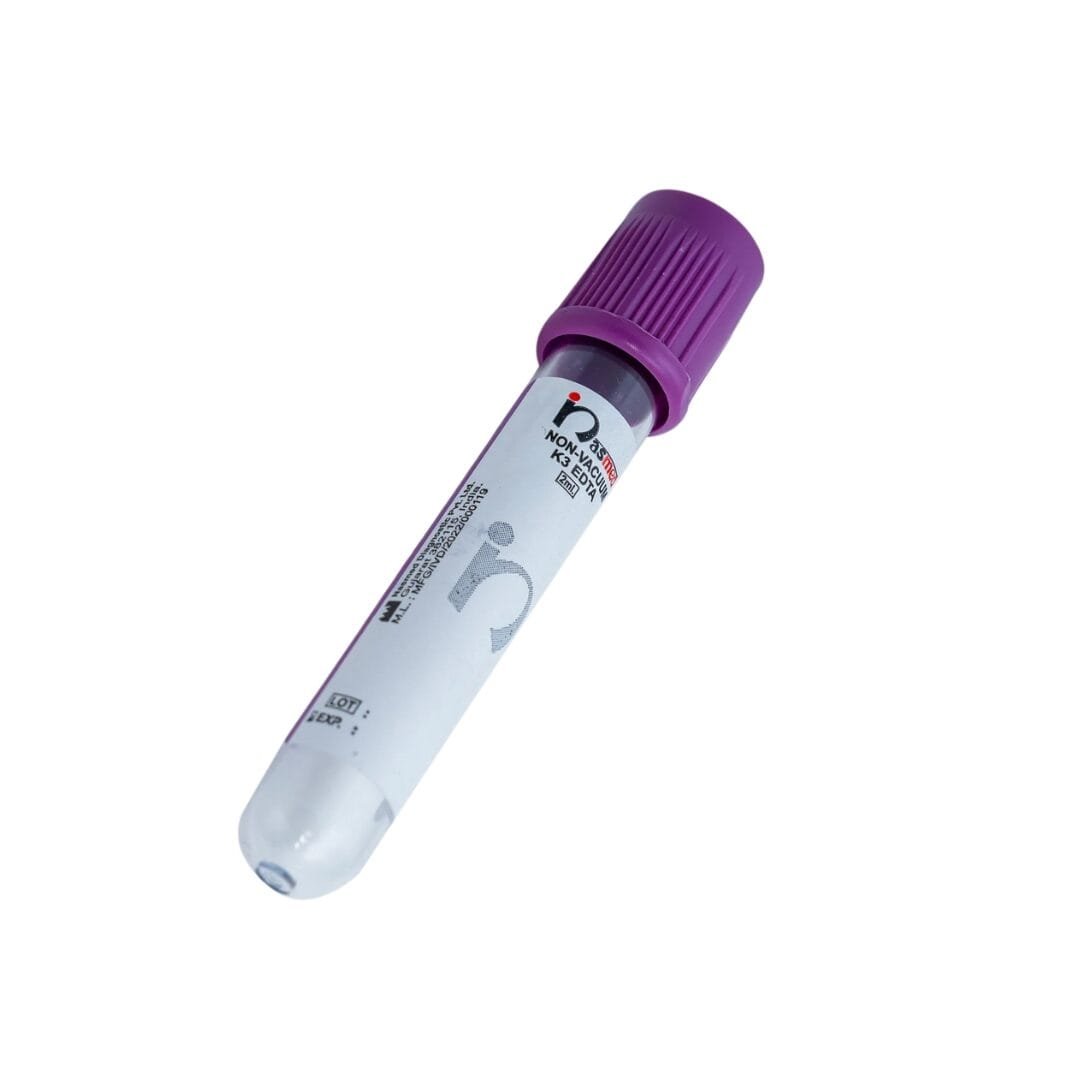
K3 EDTA Micro Pediatric Blood Collection Tube – Safe & Accurate Blood Sampling for Infants and Children
When it comes to drawing blood from infants, neonates, and young children, every drop matters. The K3 EDTA Micro Pediatric Blood Collection Tube from Nasmed Diagnostic is engineered specifically for low-volume, high-precision pediatric and neonatal blood sampling — helping labs and hospitals get accurate hematology results without putting stress on tiny veins.
Whether you’re a pathology lab, NICU, pediatric clinic, or a diagnostic distributor sourcing bulk consumables, this page covers everything you need to know: specifications, how it works, comparisons with other pediatric tube types, and answers to the most common questions clinicians ask.
What Is a K3 EDTA Micro Pediatric Tube?
A K3 EDTA Micro Pediatric Tube is a small-volume blood collection tube pre-coated with Tripotassium EDTA (K3 EDTA), an anticoagulant that binds calcium ions in blood to stop it from clotting. Because pediatric and neonatal patients have a much smaller total blood volume than adults, these tubes are designed to collect just 0.5 mL to 1 mL of blood — enough for an accurate Complete Blood Count (CBC) without over-drawing from a small patient.
The lavender/purple cap is the internationally recognized color code for EDTA tubes, making it instantly identifiable across labs, hospitals, and phlebotomy stations.
Key Features & Specifications
| Attribute | Details |
|---|---|
| Additive | K3 EDTA (Tripotassium Ethylenediaminetetraacetic Acid) |
| Cap Color | Purple / Lavender (standard EDTA color code) |
| Draw Volume | 0.5 mL – 1 mL (micro/pediatric fill) |
| Tube Material | Medical-grade Polypropylene (PP) — shatter-resistant, chemically inert |
| Closure Type | Secure-lock/push cap for leak-proof, contamination-free sealing |
| Primary Use | Hematology testing — CBC, differential count, ESR |
| Recommended For | Neonates, infants, and pediatric patients with limited blood volume |
| Collection Method | Capillary (heel/finger prick) or micro-venous draw |
| Storage | Store at room temperature, away from direct sunlight and moisture |
Why K3 EDTA Matters for Pediatric Blood Tests?
Getting an accurate blood count from a newborn or a young child is a delicate balancing act — clinicians need enough sample to run the test, but drawing too much blood from a small child carries real risk. This is exactly the problem K3 EDTA micro tubes solve:
- Prevents clotting instantly: K3 EDTA chelates calcium the moment blood enters the tube, keeping the sample liquid and cells intact for accurate counting.
- Preserves cell morphology: Unlike heparin, EDTA does not distort red or white blood cell shape, which is critical for accurate microscopic and automated hematology analysis.
- Minimizes patient trauma: The micro-volume design means less blood is drawn per test — important for neonates who may need multiple tests in a short period.
- Reduces pre-analytical errors: A properly filled, well-mixed K3 EDTA tube reduces the chance of clot formation that would otherwise force a re-draw.
How the K3 EDTA Micro Pediatric Tube Works?
- Site preparation: The phlebotomist cleans the heel, finger, or venipuncture site with an antiseptic swab.
- Sample collection: Blood is collected directly into the micro tube via capillary action or a small-volume draw device.
- Immediate mixing: The tube is gently inverted 8–10 times to mix the K3 EDTA additive evenly with the blood, preventing micro-clots.
- Labeling & transport: The tube is labeled per lab protocol and transported to the hematology analyzer for CBC or related testing.
- Analysis: Because red and white blood cells retain their natural shape in EDTA, the sample gives reliable, repeatable results on automated analyzers.
K3 EDTA vs Other Pediatric Micro Tubes — Comparison Table
Choosing the right additive tube depends entirely on which test is being ordered. Here’s how the K3 EDTA tube compares with other commonly used pediatric micro tubes available from Nasmed:
| Tube Type | Additive | Cap Color | Best For | Product Link |
|---|---|---|---|---|
| K3 EDTA Micro Pediatric Tube | Tripotassium EDTA | Purple | CBC, hematology, differential count | This page |
| Clot Activator Micro Pediatric Tube | Clot activator (no anticoagulant) | Red/Gold | Serum-based biochemistry, serology tests | View Product |
| Lithium Heparin Micro Pediatric Tube | Lithium Heparin | Green | Plasma chemistry — electrolytes, LFT, RFT | View Product |
| Sodium Citrate 3.2% Micro Pediatric Tube | Sodium Citrate (3.2%) | Light Blue | Coagulation studies — PT, APTT | View Product |
Quick rule of thumb: if the test needs whole blood (CBC, hematology), use K3 EDTA. If it needs serum, use a clot activator tube. If it needs plasma chemistry, use lithium heparin. If it’s a clotting/coagulation test, sodium citrate is the correct choice.
Who Should Use This Tube?
- NICUs and pediatric wards running routine CBCs on neonates and infants
- Pathology labs processing pediatric outpatient samples
- Diagnostic centers that need reliable, low-volume draw tubes for children
- Distributors and hospital procurement teams sourcing bulk pediatric collection consumables
Why Choose NASMED Diagnostic?
NASMED Diagnostic manufactures its pediatric micro tube range with a focus on three things labs care about most: consistent additive concentration, leak-proof sealing, and gentle low-trauma sample collection. Every batch is designed to perform reliably on standard hematology analyzers, so labs get repeatable CBC results without pre-analytical rejections caused by clotting or under-filled tubes.
You can explore the complete range of pediatric and adult blood collection tubes on our product catalog page, or visit nasmed diagnostic to learn more about our manufacturing standards and diagnostic consumables portfolio.
For bulk orders, private labeling, or distributor inquiries, our team is ready to help — get in touch with us here.
Frequently Asked Questions
1. What is a K3 EDTA Micro Pediatric Blood Collection Tube used for?
- It is used to collect small blood volumes (0.5–1 mL) from infants, neonates, and young children for hematology testing, primarily the Complete Blood Count (CBC) and differential white cell count.
2. What does the purple cap on the tube mean?
- The purple (lavender) cap is the internationally standardized color code indicating the tube contains EDTA anticoagulant, used for whole-blood hematology tests.
3. How much blood does a pediatric K3 EDTA tube collect?
- Pediatric micro EDTA tubes typically collect between 0.5 mL and 1 mL of blood — significantly less than standard adult tubes — to minimize blood loss in small patients.
4. Why is K3 EDTA preferred over K2 EDTA for some labs?
- K3 EDTA is liquid-based and disperses instantly in blood, which some labs prefer for faster mixing, while K2 EDTA is spray-dried and slightly reduces dilution effects. Both are acceptable anticoagulants for CBC testing per standard hematology practice.
5. Can this tube be used for a heel-prick (capillary) sample?
- Yes. K3 EDTA micro pediatric tubes are specifically designed to be compatible with capillary collection methods such as heel-prick or finger-prick sampling in neonates and infants.
6. How many times should the tube be inverted after collection?
- The tube should be gently inverted 8–10 times immediately after collection to ensure the K3 EDTA mixes thoroughly with the blood and prevents micro-clot formation.
7. Is this tube different from the adult K3 EDTA tube?
- Yes. While the additive chemistry is identical, the pediatric version has a much smaller draw volume and tube size, designed specifically to reduce the blood volume drawn from small patients.
8. Where can I buy K3 EDTA Micro Pediatric Tubes in bulk?
- You can order directly through NASMED Diagnostic’s product page or contact our sales team for bulk and distributor pricing.
For general reference on proper blood specimen handling and anticoagulant use in laboratory testing, see the U.S. CDC’s guidelines on blood specimen collection and handling.