
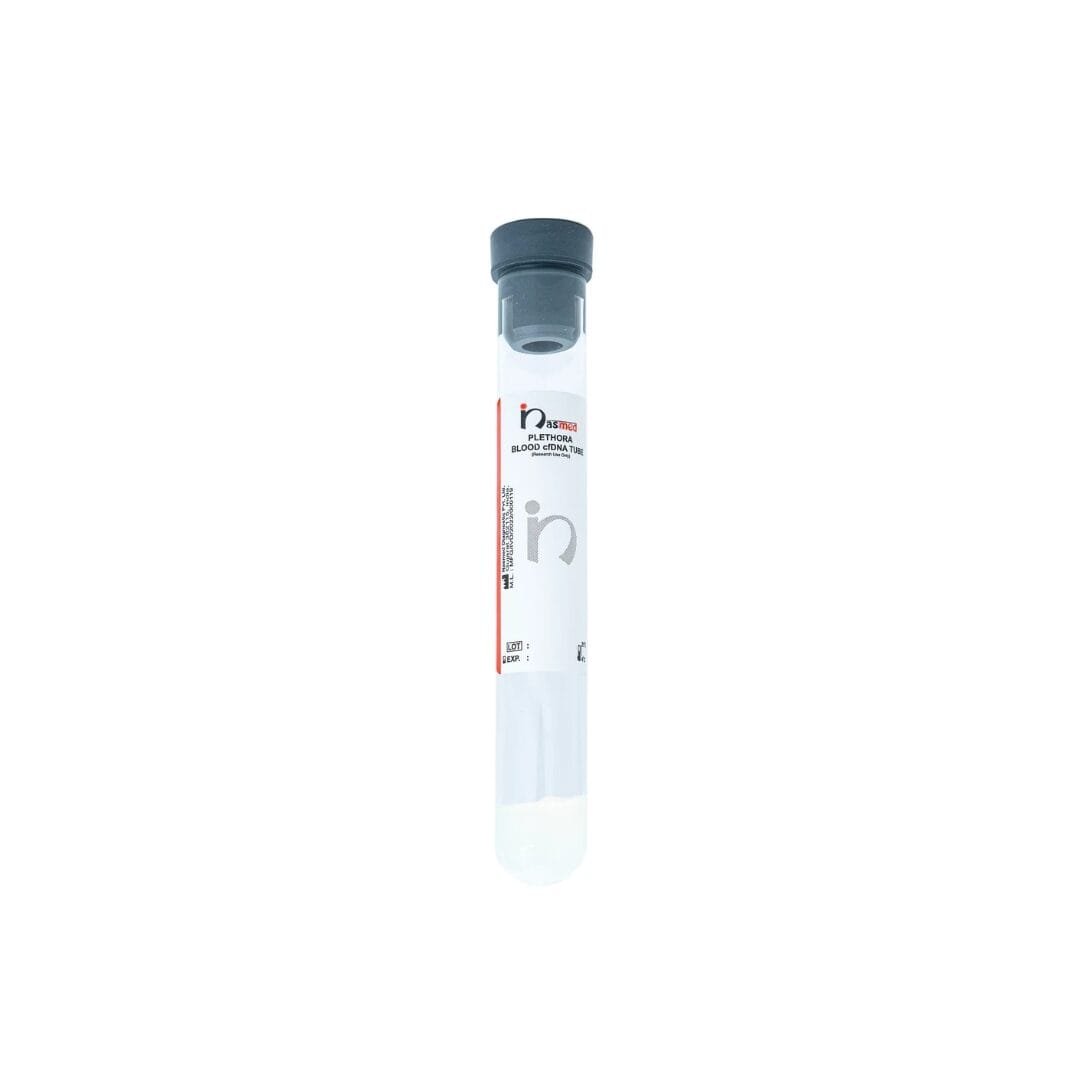
What Is a Cell-Free DNA Blood Collection Tube?
A Cell-Free DNA (cfDNA) Blood Collection Tube is a specialized vacuum blood collection tube containing a chemical additive that stabilizes circulating cell-free DNA and prevents white blood cell lysis after the blood is drawn. Unlike a standard EDTA tube, it keeps cfDNA intact during transport and storage, so labs get accurate results even when plasma cannot be separated immediately after collection.
This makes it a critical tool for Non-Invasive Prenatal Testing (NIPT), cancer liquid biopsy (ctDNA detection), and genetic research — all applications where sample integrity directly determines diagnostic accuracy.
Why cfDNA Stabilization Matters?
When blood sits in a regular collection tube, white blood cells naturally break down over time and release their own genomic DNA (gDNA) into the plasma. This contaminates the small amount of genuine circulating cfDNA, diluting the signal that a lab is actually trying to measure — whether that’s fetal DNA in a pregnant patient’s blood or tumor-derived DNA in a cancer patient.
Peer-reviewed comparisons of stabilized versus non-stabilized tubes have consistently shown that unstabilized blood samples see a sharp rise in background DNA within just a few hours at room temperature, while properly stabilized samples remain stable for extended periods. This is why regulatory and clinical bodies increasingly recommend dedicated stabilization tubes for cfDNA-based testing rather than plain EDTA collection. The U.S. CDC’s overview of cell-free DNA in clinical practice explains why pre-analytical handling — including the collection tube itself — is one of the biggest variables affecting cfDNA test reliability.
Key Features of Nasmed’s Cell-Free DNA Blood Collection Tube
- Optimal cfDNA Preservation — A specialized additive stabilizes cfDNA and minimizes degradation from the moment blood enters the tube.
- Minimized Hemolysis — Tube design and additive chemistry reduce hemolysis, preventing interference in downstream analysis.
- Leak-Proof, Robust Construction — Built from high-quality materials to protect sample integrity during transport and storage.
- User-Friendly Design — Clear labeling and simple, standardized collection instructions reduce pre-analytical errors.
- Broad Assay Compatibility — Works with a wide range of downstream cfDNA extraction and sequencing platforms.
Applications of cfDNA Blood Collection Tubes
1. Non-Invasive Prenatal Testing (NIPT)
- Detects fetal chromosomal abnormalities (such as Trisomy 21, 18, and 13) from cfDNA circulating in maternal blood, avoiding invasive procedures like amniocentesis.
2. Cancer Liquid Biopsy
- Enables monitoring of tumor progression and detection of circulating tumor DNA (ctDNA) to guide treatment decisions — often used alongside or in place of repeat tissue biopsies.
3. Genetic & Research Applications
- Supports large-scale studies on inherited diseases, genetic predispositions, and the development of new cfDNA-based diagnostic assays.
For labs building a complete cfDNA workflow, explore our full Cell-Free DNA product range.
Nasmed cfDNA BCT vs. Standard Collection Tubes: Comparison Table
| Parameter | Standard EDTA Tube | Plain/Serum Tube | Nasmed Cell-Free DNA BCT |
|---|---|---|---|
| cfDNA Stabilization Additive | No | No | Yes |
| White Blood Cell (gDNA) Lysis Risk | High after a few hours | High | Minimized |
| Recommended Processing Time | Within 4–6 hours | Immediate | Extended room-temperature window |
| Hemolysis Risk | Moderate | Moderate–High | Minimized by design |
| Suitable for NIPT | Not recommended | No | Yes |
| Suitable for Liquid Biopsy (ctDNA) | Not recommended | No | Yes |
| Sample Transport Suitability | Limited (needs cold chain) | Limited | Better suited for ambient transport |
| Best Use Case | Routine hematology/genetic testing with immediate processing | Serum-based biochemistry tests | NIPT, cancer liquid biopsy, cfDNA research |
How to Use the Cell-Free DNA Blood Collection Tube?
- Draw venous blood directly into the tube up to the marked fill line.
- Gently invert the tube 8–10 times immediately after draw to mix the additive with blood — do not shake.
- Store and transport at room temperature; avoid refrigeration or freezing before plasma separation.
- Process for plasma separation within the manufacturer’s recommended window for best cfDNA yield.
- Extract cfDNA using a standard circulating nucleic acid extraction kit compatible with downstream PCR/NGS platforms.
Why Choose Nasmed Diagnostics?
Nasmed Diagnostics Pvt. Ltd. manufactures its cfDNA blood collection tubes under strict quality control standards, backed by years of expertise in in-vitro diagnostic consumables. Our focus stays on consistent performance, reliable stabilization chemistry, and responsive technical support — so diagnostic labs and research teams can trust every sample they collect.
Browse our complete diagnostic consumables range on the Our Products page, or Contact Us for bulk orders, technical datasheets, or OEM/private-label enquiries.
Frequently Asked Questions
1. What is a cell-free DNA (cfDNA) blood collection tube used for?
- It is used to collect and stabilize circulating cell-free DNA in blood for applications like non-invasive prenatal testing (NIPT), cancer liquid biopsy, and genetic research.
2. How is a cfDNA tube different from a normal EDTA tube?
- A cfDNA tube contains a special additive that stabilizes cfDNA and prevents white blood cells from breaking down and releasing genomic DNA, which a standard EDTA tube does not prevent.
3. Can cfDNA blood samples be transported at room temperature?
- Yes. Properly stabilized cfDNA tubes are designed to keep samples stable at ambient/room temperature during transport, unlike plain EDTA tubes that require rapid processing or cold storage.
4. Is the Nasmed cfDNA tube suitable for NIPT testing?
5. What happens when you do not process blood quickly in a regular tube?
- White blood cells begin to lyse and release genomic DNA into the plasma, which can dilute or contaminate the genuine cfDNA signal and affect test accuracy.
6. Does hemolysis affect cfDNA test results?
- Yes, hemolysis can interfere with downstream cfDNA analysis. Nasmed’s tube design and additive are formulated to minimize hemolysis risk.
7. Where can I buy Nasmed cfDNA blood collection tubes in bulk?
- You can contact our team directly for bulk pricing, datasheets, and distributor enquiries.