
Advanced Lab Disposables for Efficient Diagnostic Procedures
Advanced Lab Disposables for Efficient Diagnostic Procedures: Nasmed Diagnostic
Advanced Lab Disposables for Efficient Diagnostic Procedures play a critical role in maintaining sample accuracy, safety, and testing reliability. Efficient diagnostics begin long before analyzers and reports. Proper sample collection, preservation, transportation, and processing directly impact diagnostic outcomes. Hospitals, laboratories, and diagnostic centres require high-quality blood collection tubes and lab disposables that ensure sample integrity, regulatory compliance, contamination control, and manufacturing consistency for smooth daily laboratory operations and dependable test results.
In this article, you will learn:
- what makes diagnostic lab disposables reliable in day-to-day use
- how manufacturing quality affects reporting accuracy
- what to check before choosing a supply partner
- how Nasmed Diagnostics supports efficient diagnostic procedures across India
Why Choose Nasmed Diagnostics for Advanced Lab Disposables for Efficient Diagnostic Procedures
The best reason to evaluate a manufacturer carefully is simple: small disposable components can create large downstream problems. A poorly formed tube, inconsistent vacuum, weak cap fit, or contamination risk can lead to recollection, reporting delay, and avoidable friction between phlebotomy teams, labs, and clinicians.
Nasmed Diagnostics operates from Survey No 282 (Old Block No 213 Paiki), Nandoli, Gandhinagar, Gujarat 382115, India, with production led by Directors Kush Patel & Suril Shah and supported by experienced technicians and quality experts. The manufacturing environment includes an ISO 7 clean room, which matters when you are handling products used in direct diagnostic workflows. In practical terms, that means better contamination control, more stable production conditions, and stronger confidence for hospitals and labs.
Yes, buyers today are more informed than ever. Teams in Ahmedabad, Mumbai, and Delhi often compare product consistency, closure reliability, packaging hygiene, and turnaround support before finalizing a vendor. In my experience with Indian diagnostics operations, procurement heads rarely want dramatic claims. They want fewer complaints from collection teams, less breakage in transit, and more dependable stock movement.
That is also why many enquiries for vacuum blood collection tubes manufacturer in Gandhinagar are not purely price-driven. They usually come from labs that have already faced issues like clotting in the wrong tube, cap leakage, or variation between batches. A serious supplier has to think beyond dispatch and look at the full diagnostic chain.
For buyers evaluating wider product categories, Nasmed Diagnostics also supports micro paediatric tubes and specialized sample collection needs with practical manufacturing discipline. That matters for neonatal, pediatric, and low-volume collection settings where tube design directly affects usability.
Our Advanced Lab Disposables Manufacturing Capabilities
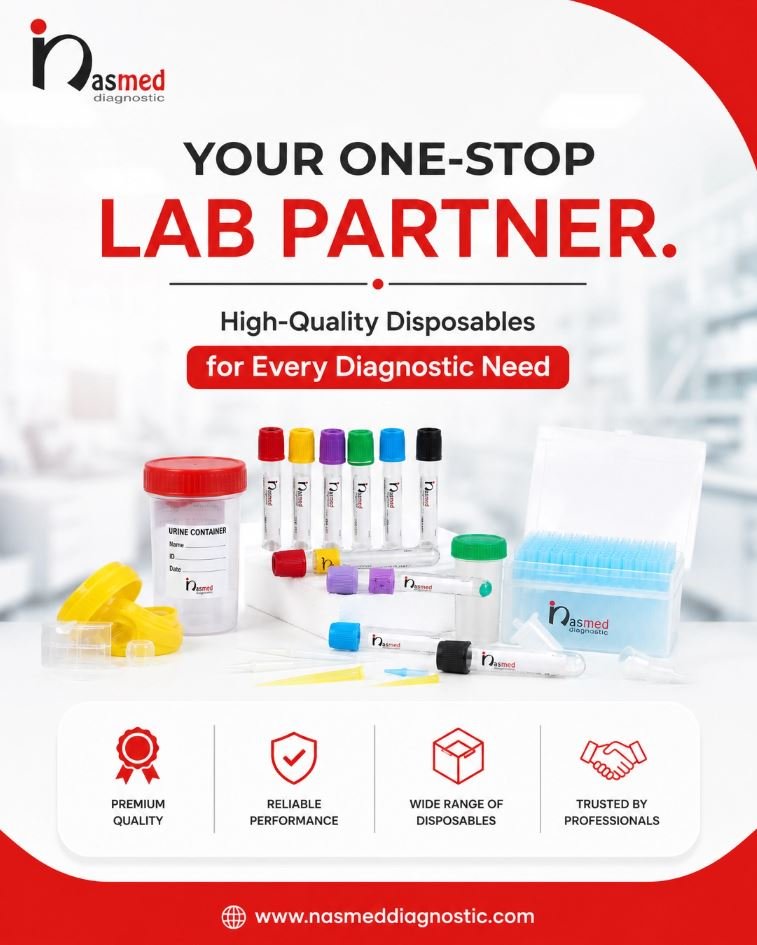
Here’s how Nasmed Diagnostics approaches diagnostic disposables: by aligning manufacturing controls with real-world lab use. That includes vacuum blood collection tubes, non-vacuum blood collection tubes, gel lithium heparin tubes, micro paediatric tubes, cell-free DNA tubes, urine containers, and custom diagnostic solutions for different collection and handling workflows.
The best manufacturing setup is not just about machinery. It is about repeatability. A reliable line should maintain dimensional accuracy, closure fit, additive compatibility, labeling clarity, and sterile handling practices. This is especially important for sterile blood collection tubes and other products used in high-throughput pathology and biochemistry settings.
Common product categories used in routine and specialized diagnostics include:
- vacuum blood collection tubes for controlled draw and workflow consistency
- non-vacuum blood collection tubes for manual collection preferences
- gel lithium heparin tubes for plasma separation applications
- micro paediatric tubes for neonatal and pediatric collection
- cell-free DNA tubes for advanced molecular handling needs
- urine containers for routine pathology and microbiology workflows
- custom diagnostic solutions for lab-specific operational requirements
For teams researching cell-free DNA tubes, the concern is usually sample stability and handling reliability. For routine pathology buyers, the concern is often much more basic but equally important: Will the tube perform properly every day at scale?
I have seen this play out in Bangalore, Hyderabad, and Chennai, where fast-growing diagnostics chains often standardize vendors only after internal usability checks. They look at rack compatibility, labeling readability, cap performance, and whether phlebotomists find the product easy to handle during peak morning hours. That is the reality of diagnostic lab disposables in India: field performance matters as much as brochure specifications.
A small example: a mid-sized lab in Surat once shifted from a low-cost unstructured supplier after repeated recollection issues from inconsistent vacuum retention. The operational cost of those recollections was much higher than the apparent saving on procurement. Good manufacturing prevents such hidden losses.
Get a Quote for [Advanced Lab Disposables for Efficient Diagnostic Procedures]
Navigating Regulatory Compliance & CDSCO Certification
Yes, regulatory compliance should be a deciding factor, not a line item. In India, medical device buyers are increasingly aware of CDSCO expectations, documented quality controls, and traceability. For diagnostic sample collection products, compliance is closely linked with patient safety, batch consistency, and procurement confidence.
Nasmed Diagnostics manufactures in a contamination-controlled environment and offers CDSCO certified tubes produced in an ISO 7 clean room facility. That combination supports stronger E-E-A-T signals because it reflects real manufacturing discipline, not generic marketing language. International material guidelines also matter here, especially when buyers want assurance on resin quality, closure materials, and application suitability.
Key compliance checkpoints buyers should review:
- CDSCO certification status
- clean room production conditions
- batch traceability and quality checks
- packaging integrity
- material compatibility with intended test applications
- consistency in labeling and supply
For labs comparing Diagnostic Tubes Suppliers India, this is where the decision becomes clearer. A compliant manufacturing setup reduces quality variation and supports audit readiness. Procurement teams in Jaipur, Pune, and Kolkata often ask detailed questions around storage, shelf-life consistency, and dispatch condition because they have learned the hard way that poor packaging can damage otherwise acceptable products.
A useful reference point for buyers is this: even if two products look similar externally, differences in manufacturing hygiene, additive handling, and process control can affect actual lab performance. That is why regulatory discipline should be viewed as an operational necessity, not a premium feature.
For practical reading on regional supply context, buyers can review blood collection tubes in Ahmedabad and related category discussions to understand market expectations better.
Local Suppliers vs Nasmed Diagnostics
Here’s how procurement teams usually compare options when evaluating a blood collection tubes manufacturer Gandhinagar or broader lab consumables India supplier network.
| Comparison Point | Unstructured Local Supplier | **Nasmed Diagnostics** |
|---|---|---|
| Manufacturing environment | May vary; often unclear | ISO 7 clean room facility |
| Regulatory confidence | Limited documentation | CDSCO certified manufacturing focus |
| Product range | Often narrow | Vacuum, non-vacuum, gel lithium heparin, micro paediatric, cell-free DNA, urine containers |
| Batch consistency | Can fluctuate | Controlled processes with quality oversight |
| Support for custom requirements | Often limited | Custom diagnostic solutions available |
| Suitability for growth-stage labs | May struggle with scale | Better aligned for hospitals, clinics, and labs across India |
The best takeaway from this comparison is practical: consistent disposables reduce friction across collection, transport, testing, and reporting.
Step-by-Step Process – How We Deliver Advanced Lab Disposables for Efficient Diagnostic Procedures
Here’s how Nasmed Diagnostics supports customers from requirement to supply:
1. Requirement mapping
The process starts with test type, sample volume, workflow pattern, and storage conditions. A standalone lab in Vadodara may need different mix planning than a hospital network in Chandigarh.
2. Product fitment
Teams select from vacuum blood collection tubes, non-vacuum blood collection tubes, gel lithium heparin tubes, micro paediatric tubes, cell-free DNA tubes, or urine containers manufacturers’ categories depending on end use.
3. Quality and compliance alignment
The selected product line is checked against application needs, documentation expectations, and packaging requirements.
4. Sampling and validation
Before wider movement, buyers usually test cap fit, vacuum behavior, labeling, centrifuge compatibility, and user acceptance. For neonatal requirements, this guide on micro pediatric blood tubes for neonatal testing is especially useful.
5. Supply and support
Once approved, supply planning is aligned to monthly usage and dispatch cycles. Buyers handling urine testing workflows can also review why urine containers matter in testing for practical handling insights.
A mini success story illustrates this well. A diagnostic centre in Indore was facing repeat complaints from collection staff about cap tightness and occasional leakage during inter-branch transport. After switching to a more controlled supply setup and tightening validation checks, complaint frequency dropped noticeably within the first two procurement cycles. Nothing dramatic changed in the lab method. The disposable quality improved, and operations became smoother.
Real Client Case Study
Yes, we provide support that fits real Indian diagnostic workflows, not idealized assumptions. One anonymized example comes from a multi-location pathology group based in Ahmedabad with referral volumes also coming from Mumbai and Delhi.
The client had three recurring issues:
- inconsistent tube performance across batches
- avoidable recollections in busy morning slots
- procurement stress caused by variable supply quality
After reviewing their usage pattern, product mix, and complaint logs, the shift was made toward a more structured supply of sterile blood collection tubes, gel lithium heparin tubes, and micro collection products. The client also standardized internal checks for receiving, storage, and first-use validation.
Within one quarter, they reported:
- fewer sample handling complaints from phlebotomy teams
- reduced recollection burden in routine testing
- better confidence during internal quality reviews
- smoother inventory planning across branches
This is usually what buyers actually want. Not exaggerated promises. Just reliable diagnostic lab disposables that support efficient procedures day after day.
FAQs
What are advanced lab disposables in diagnostics?
Advanced lab disposables are sample collection and handling products such as blood collection tubes, micro paediatric tubes, cell-free DNA tubes, and urine containers designed to improve accuracy, hygiene, and workflow efficiency.
Why does clean room manufacturing matter for blood collection tubes?
Clean room manufacturing helps reduce contamination risk, supports process consistency, and improves confidence in products used for diagnostic sampling.
Are CDSCO certified tubes important for Indian labs?
Yes. CDSCO certification supports regulatory confidence, procurement compliance, and better trust in manufacturing controls.
How do I choose between vacuum and non-vacuum blood collection tubes?
Choose based on your collection method, workflow, sample volume needs, and test protocol. Vacuum tubes help standardize draw volume, while non-vacuum tubes may suit some manual collection preferences.
Are micro paediatric tubes suitable for neonatal testing?
Yes. They are designed for low-volume collection, which is important in neonatal and pediatric settings where blood conservation matters.
Do urine containers affect test quality?
Yes. Poor sealing, contamination, or handling issues can affect sample integrity and delay accurate reporting.
How can I evaluate Blood Collection Tubes Manufacturers effectively?
Review certification status, clean room conditions, product range, batch consistency, quality documentation, packaging strength, and responsiveness to technical queries.
For a Free Product Consultation or to Download Blood Collection Tubes Cost Guide, contact Nasmed Diagnostics at +91 79908 01393, WhatsApp +91 74908 06241, or email info@nasmeddiagnostic.com. If your team is comparing blood collection tubes manufacturers near me, a structured technical discussion will save more time than a price-only comparison.