
Types Micro Pediatric Blood Collection Tubes: Complete Guide for Labs
Drawing blood from a newborn or a toddler requires hands and the correct tube. The veins are very small and every drop of blood is important. Labs, hospitals and clinics must therefore know the types of pediatric blood collection tubes before they buy them. The correct choice helps keep the sample quality good reduces the need for pricks and helps keep the young patients calmer.
This guide explains each tube type the additive it has and when it’s best to use it. Nasmed Diagnostics Pvt. Ltd., a manufacturer from Gandhinagar that’s CDSCO-certified shares practical insights, from its ISO 7 clean room facility.
What Is a Micro Blood Collection Tube?
A micro blood collection tube is a container that holds a tiny amount of blood usually between 250 microliters and 1 milliliter. It is filled using a puncture, such as a heel prick, a fingertip stick or a puncture on the earlobe.
Most micro blood collection tubes have a collection scoop fill lines printed on the side and a colour-coded cap to help identify the type of additive inside. The wide opening makes it easier for blood to flow smoothly into the tube.
This type of tube is especially helpful for people with veins, such as adults who have had burns or the elderly.. The main users are infants and children. These tubes are made to work with blood volumes, which is better for young patients.
Why Pediatric Blood Collection Needs Special Tubes
Children, newborns have much less blood than adults. Taking much blood at once can lead to anaemia, a condition where the body doesn’t have enough red blood cells. The World Health Organization gives guidelines that recommend keeping blood sample sizes small when drawing blood from patients. This is why special micro blood collection tubes are needed.
Micro blood collection tubes help in three ways:
- They require less blood, for each test.
- They reduce how times a lancet must be used.
- They lower the chance of haemolysis, which happens when red blood cells break open if the tube is designed properly.
Types Micro Pediatric Blood Collection Tubes by Additive
Each tube has an additive that keeps the blood sample stable for a test. Here are the main types:
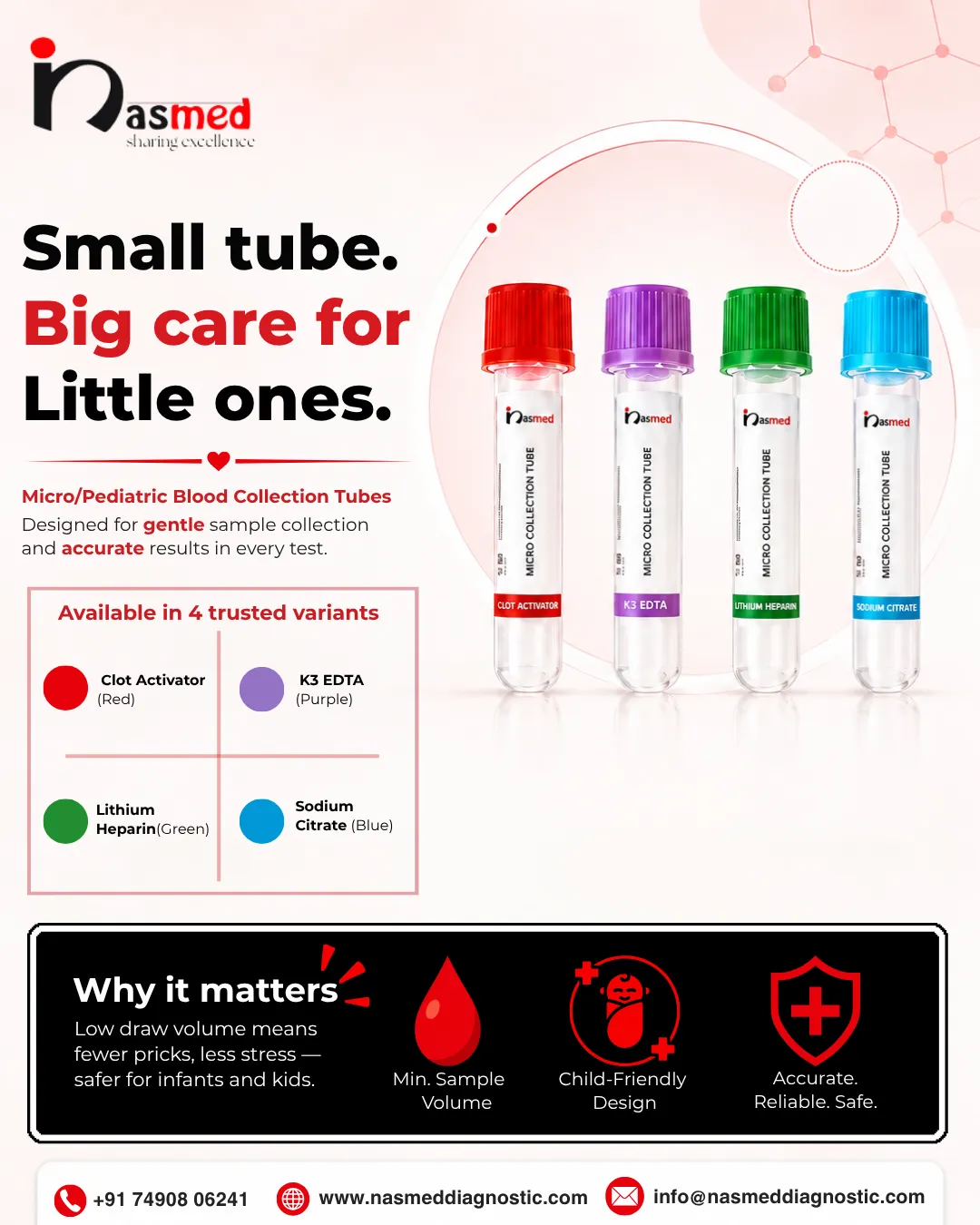
EDTA tubes (lavender cap): These preserve blood and are used for complete blood count, hemoglobin A1c and blood typing. EDTA removes calcium from the blood. Stops clotting.
Plain or clot activator tubes ( cap): These help form serum quickly and are used for biochemistry tests, serology and hormone measurements.
Gel serum separator tubes (gold cap): These have a gel barrier. After centrifugation the gel separates the serum from the cells cleanly.
Lithium tubes (green cap): These give plasma and are used for urgent chemistry tests, electrolytes and liver function. Gel versions help separate the plasma
Sodium fluoride tubes (grey cap): These stop the breakdown of glucose and lactate in the blood so results stay accurate.
Sodium citrate tubes ( blue cap): These are used for coagulation studies such as PT and aPTT tests. They keep the blood from clotting. Allow proper testing of clotting factors.
The table below summarises the types micro pediatric blood collection tubes at a glance.
| Tube Type | Cap Colour | Sample Obtained | Common Tests |
|---|---|---|---|
| EDTA (K2/K3) | Lavender | Whole blood | CBC, HbA1c, blood group |
| Clot activator | Red | Serum | Biochemistry, serology, hormones |
| Gel serum separator | Gold | Serum | LFT, KFT, lipid profile |
| Lithium heparin (± gel) | Green | Plasma | Electrolytes, urgent chemistry |
| Sodium fluoride | Grey | Plasma | Glucose, lactate |
| Sodium citrate | Light blue | Plasma | PT, aPTT, coagulation |
Note: Cap colours can vary slightly between manufacturers. Always check the products instructions for use.
Contact UsHow Many Types of Blood Collection Tubes Are There?
Manufacturers classify tubes by additive and by format. By additive most labs rely on six core types: EDTA, clot activator, gel separator, heparin, fluoride and citrate. Specialty options, such as cell- DNA tubes extend this list.
By format tubes fall into three groups: vacuum, -vacuum and micro. The exact count therefore depends on how you classify them. Still the six additive categories cover all routine work.
How to Choose the Right Tube
Follow these steps for every collection:
- Read the test requirement on the lab request form.
- Match the additive to the sample type (serum, plasma or whole blood).
- Confirm the minimum fill volume.
- Follow the order of draw: EDTA first, other additives next and serum last. CLSI standards explain this sequence in detail.
- Label the tube immediately at the bedside.
Best Practices for Sample Handling
Good technique matters much as the tube itself. Warm the heel or finger first to improve blood flow. Wipe away the drop because it often contains tissue fluid. Avoid squeezing the site since this causes haemolysis and unreliable results.
Next fill the tube to the marked line. Mix it gently by inverting it as the instructions direct. Finally transport the sample to the lab quickly. Store it at the correct temperature. The MedlinePlus blood test guide offers patient-friendly background.
Why Choose Diagnostics?
Buyers comparing the types micro pediatric blood collection tubes on the market should look at manufacturing quality first. Nasmed Diagnostics builds its products for accuracy, safety and consistency.
Directors Kush Patel and Suril Shah lead a team of technicians and quality experts. Together they run a state-of-the-art ISO 7 room (Class 10,000) that supports contamination-free manufacturing. Hospitals, clinics and labs across India trust this approach.
Here is what sets Nasmed Diagnostics apart:
- CDSCO certified manufacturing, for confidence.
- Complete range: Vacuum, Non-Vacuum, Micro/Paediatric, Cell-Free DNA and Gel Lithium Heparin tubes, plus urine containers.
- A reliable micro blood collection tube range designed for volume low-stress sampling.
- International material guidelines compliance.
- Custom diagnostic lab disposables built to your specifications.
- Affordable. Dependable support.
Explore the Nasmed Diagnostics paediatric tube range. Send your requirements to the team.
Address: Survey No 282 (Old Block No 213 Paiki) Nandoli, Gandhinagar, Gujarat 382115 India Phone: +91 79908 01393 | Email: info@nasmeddiagnostic.com
Frequently Asked Questions
Q.What is a micro blood collection tube?
- It is a tube that holds between 250 µL and 1 mL of capillary blood often collected from a heel or finger prick.
Q.How many types of blood collection tubes are there?
- Laboratories use six additive types: EDTA, clot activator, gel separator, heparin, fluoride and citrate.
Q.Which tube is used for a CBC in infants?
- An EDTA tube with a lavender cap is the choice for complete blood count tests in infants.
Q.Which cap colour is used for glucose testing?
- The grey cap is used for glucose testing because it contains sodium fluoride, which helps preserve glucose levels
Q.Do only babies need tubes?
- No not babies. Adults, with veins can also benefit from using micro blood collection tubes.
Q.What is the capillary order of draw?
- When collecting blood samples fill the EDTA tube first then other additive tubes and serum tubes last.
Q.Where can I buy these tubes in India?
- You can order them from Nasmed Diagnostics, a CDSCO-certified manufacturer based in Gujarat.
Conclusion
In conclusion knowing the types of micro pediatric blood collection tubes helps laboratories provide accurate results while causing as little discomfort as possible. Now that you understand how many different types of blood collection tubes are available and when each one is needed you can make purchases with confidence. Getting better results from blood collection starts with using the correct tube and working with a reliable manufacturer.
Nasmed Diagnostics Pvt. Ltd. Has CDSCO certification, uses ISO 7 clean room production and offers pricing. Call +91 79908 01393 message on WhatsApp at +91 74908 06241. Email info@nasmeddiagnostic.com, for a quote today.
Contact Us