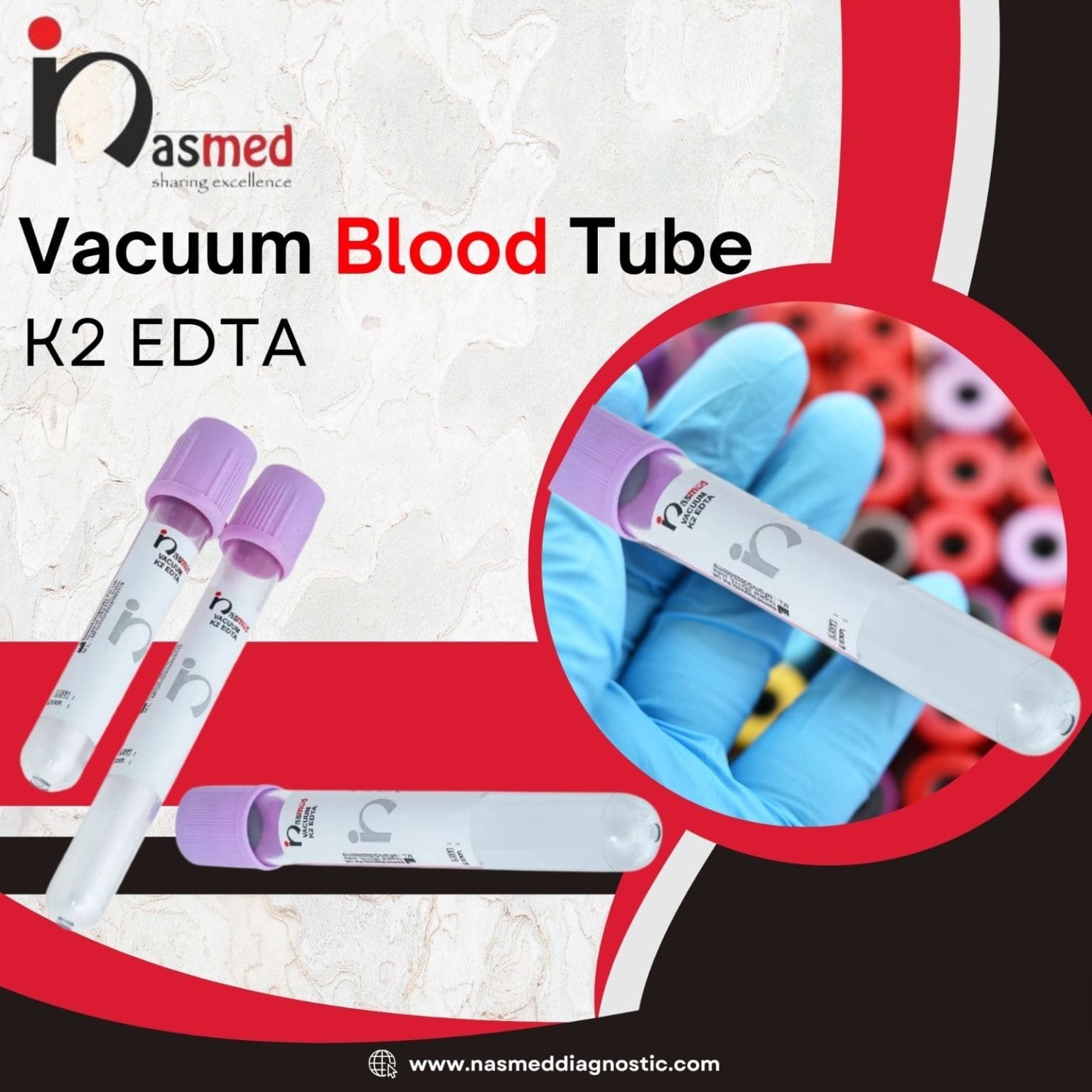
Nasmed Diagnostics: Premium Vacuum Blood Collection Tubes for Accurate Pathology Testing
Vacuum Blood Collection Tubes in Pathology have become an essential component of modern diagnostics and pathology testing. Across global healthcare systems, laboratories in India, the USA, and the UK are managing higher test volumes, tighter turnaround expectations, and increasing quality benchmarks, making reliable blood collection more critical than ever.
The bedrock of every precise lab outcome rests on a vital initial action well understood by seasoned professionals: correct blood sample procurement. Safeguarding the patient, maintaining sample quality, and adhering to uniform pre-analytical procedures guarantee that subsequent test readings are credible and clinically valuable.
In daily diagnostic lab functions, Vacuum Blood Collection Tubes remain an indispensable supply item. These containers allow for systematic blood drawing, minimize errors during handling, and enable labs to furnish accurate, trustworthy results for both practitioners and those receiving care.
Evolving Requirements of Contemporary Diagnostic & Medical Labs
Diagnostic facilities globally are adjusting to practical demands that were less pronounced a decade ago:
- Upticks in testing volumes for outpatients and inpatients
- Quicker result delivery times are expected by clinicians
- Conformance with global quality benchmarks
- Increased scrutiny from hospital purchasing departments and outside purchasers
Producers and suppliers focused on export, serving markets like the UAE and certain European nations, confront added mandates regarding paperwork, consistency between batches, and traceability. In numerous locales, labs must maintain constant audit readiness, where even basic supplies are assessed for reliable performance.
These shifts underscore the importance of durable, well-made blood collection tubes that yield identical functioning across every production run.
What Constitutes a Vacuum Blood Collection Tube?
In practical laboratory terms, a vacuum blood collection tube is a pre-emptied container made to draw a set amount of blood directly from a patient’s vein via a needle assembly.
In everyday procedures, the tube:
- Draws blood without manual pulling
- Regulates the volume gathered
- Contains agents necessary for particular tests
- Permits sealed transit to the testing instrument
Phlebotomists and lab staff utilize these tubes during outpatient collections, bedside rounds, emergency draws, and routine diagnostic screening events. The stable vacuum pressure helps ensure the sample quantity stays within the intended limits, supporting accurate subsequent test processing.
Why Blood Collection Tubes Are Crucial for Accurate Blood Sample Procurement?
In hospital and pathology lab settings, sample integrity begins the instant of collection. Inferior tubes can jeopardize results before the sample even reaches the analyzer.
Dependable blood collection tubes help assure:
- Minimized risk of contamination
- Sample composition remains stable during transit
- Uniform operation across varied patient samples
For facilities serving international clientele or participating in external quality assurance schemes, consistent pre-analytical performance is vital. Even slight variations in tube quality can introduce inconsistencies observable in audit logs and quality reviews.
The Contribution of Blood Collection Tubes to Reliable Test Outcomes
Improper or inconsistent tubes can generate later difficulties that experienced lab staff recognize instantly:
- Clotting in samples treated with anticoagulants
- Red blood cell rupture (hemolysis) due to poor material quality
- Uneven separation in tubes containing separation gel
- Increased need for sample retesting
Safety, Sterility, & Patient Care Aspects
Blood drawing is one of the most frequent invasive procedures in healthcare. Despite being routine, safety benchmarks must remain absolute.
Key safety elements involve:
- Sterilized tubes to prevent introducing germs
- Closures resistant to leakage for secure transit
- Smooth internal surfaces to lessen cell trauma
- Design facilitating safe handling by phlebotomists
Experienced lab professionals know that subtle enhancements in consumable design can lower occupational exposure risks and improve patient ease during collection.
Suitability with Modern Diagnostic Apparatus
Contemporary labs depend on automated analyzers, centrifuges, and transport mechanisms. Blood collection tubes must integrate seamlessly with:
- Automated units that feed samples
- High-speed spinning
- Tracking systems based on bar codes
- Transport via air tubes or manually
In a global laboratory context, compatibility ensures that tubes used in locations like Singapore or Canada perform dependably on the identical analyzer platforms used in large diagnostic networks in India. Equipment alignment reduces handling steps and limits pre-analytical irregularity.
Manufacturing Excellence, Additives, & Tube Uniformity
Consistency in manufacturing relates to repeatability across production runs, not just marketing assurances.
Tube production focused on quality secures:
- Steady vacuum levels
- Reliable concentration of additives
- Uniform tube dimensions
- Dependable seal integrity at the stopper
Storage, Shelf Span, & Transit Considerations
Logistics and storage impact tube performance more than many labs comprehend.
Primary factors include:
- Exposure to heat in climates like India’s
- Extended shipping to areas such as Africa
- Lengthy time held in warehouses for international suppliers
A stable shelf life and packaging resilience help maintain vacuum efficacy and additive stability throughout the distribution chain. For labs in regions like Nigeria and Kenya, robust packaging protects tube function even when logistical infrastructure differs.
Value for Money for Labs & Healthcare Providers
Financial efficiency in diagnostics stems from operational steadiness, not just the price per unit.
Trustworthy blood collection tubes contribute to:
- Fewer sample rejections
- Less need for repeated draws
- Reduced waste of supplies
- More reliable inventory forecasting
In hospital and pathology lab settings, minimizing pre-analytical errors lets facilities direct resources toward patient aid rather than remediation efforts.
Regulatory Adherence, Benchmarks, & Export Readiness
Labs and purchasing groups increasingly evaluate consumables for their suitability for export and international acceptance.
Important expectations cover:
- Traceability per batch
- Manufacturing records
- Consistent quality documentation
- Packaging and labelling suited for audits
For distributors supplying regions like Australia and parts of Latin America, production practices that support export facilitate smoother purchasing processes and regulatory inspections without adding complexity for lab personnel.
Integration into Hospital & Lab Operations
Blood collection tubes are not isolated items. They must blend into daily routines:
- Outpatient collection desks
- Ward visits
- Emergency sample collection
- Central lab processing
In diagnostic systems operating across multiple locations, standardized tube performance aids in maintaining uniform operations at all collection sites. Seasoned lab professionals recognize that uniformity at the collection phase enhances predictability throughout the entire testing lifecycle.
Instruction, Handling, & Disposal Methods
Ease of instruction is important in healthcare settings with high staff turnover.
Well-conceived tubes support:
- Simple orientation for newly hired phlebotomists
- Clear visual markings
- Safe discarding post-use
- Compliance with biomedical waste rules
In routine diagnostic lab work, standardized supplies shorten training durations and improve adherence to safety protocols.
Why is selecting the right producer important?
The selection of a manufacturer impacts laboratory stability over time.
Trustworthy producers exhibit:
- Uniform production systems
- Quality checks across all batches
- Understanding of export logistics
- Capability for stable, long-term supply
For labs and suppliers serving healthcare networks in the Middle East and Southeast Asia, reliable manufacturing partners lessen operational uncertainty and procurement risk.
Concerning Nasmed Diagnostic Pvt Ltd
Nasmed Diagnostic Pvt Ltd is an Indian manufacturer supplying the domestic and international diagnostic sectors, emphasizing manufacturing uniformity and practical laboratory usability.
The firm supports labs, hospitals, and distributors across numerous areas with standardized diagnostic supplies designed for real-world lab procedures. Further details are available at 👉 https://www.nasmeddiagnostic.com/
In hospital and pathology lab settings, manufacturers who grasp daily operational hurdles contribute to more stable diagnostic processes over the long run.
Summary:
Blood collection may seem commonplace, but its effect on diagnostic accuracy is significant. Reliable blood collection tubes bolster patient safety, lab efficiency, and clinical assurance.
In day-to-day diagnostic lab activities, uniformity in the pre-analytical phase lessens downstream fluctuation and helps labs provide dependable results across varied healthcare environments.
For labs and distributors serving both domestic and international healthcare systems, opting for well-made blood collection tubes is a pragmatic stride towards sustained diagnostic quality.
Primary Takeaways
- Accuracy in Diagnostics
- Sample Security & Cleanliness
- Operational Fluidity
- Cost Management for Labs
- Rising Global Demand
FAQs
1. How do blood collection tubes impact the correctness of tests?
- Tube quality influences sample stability, how well anticoagulants work, and the chance of contamination, all of which affect the final readings.
2. What are the correct storage environments for vacuum blood collection tubes?
- Keeping them in a cool, dry area away from direct warmth helps preserve vacuum strength and additive stability.
3. Can the same tubes be employed with various automated analyzers?
- Compatibility with analyzer systems is key; consistent tube sizing and material support smooth integration.
4. What typical blunders do labs commit with blood collection tubes?
- Using tubes past their expiration, storing them incorrectly, and choosing the wrong tube type for specific tests are frequent sources of errors before analysis.
5. How does the shelf life impact how the tubes perform?
- Outdated tubes might lose vacuum seal integrity or additive effectiveness, increasing the likelihood that a sample will be rejected.
#BloodCollectionTube #DiagnosticConsumables #PathologyLab #MedicalDiagnostics #NasmedDiagnostic #IVDProducts #HealthcareManufactufacturing #GlobalDiagnostics #SodiumFluorideBloodCollectionTubes