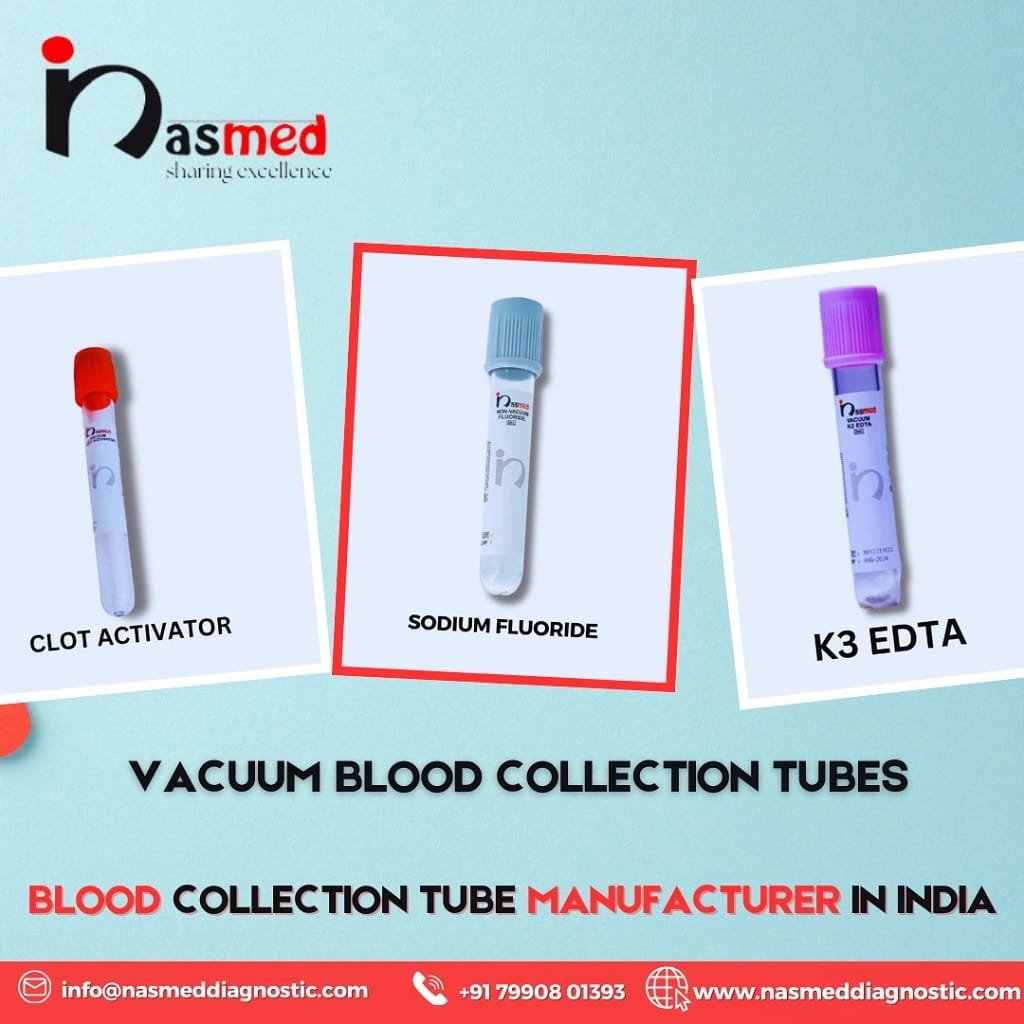
Nasmed Diagnostics: Blood Collection Tubes Manufacturer and Exporter
In the rapidly evolving world of diagnostics, the accuracy of test results depends not only on advanced laboratory instruments but also on the essential tools used for sample collection. Among these, blood collection tubes play a crucial role in ensuring reliable and consistent outcomes in clinical and pathology testing. Laboratory professionals across India, the USA, the UK, and other global healthcare markets understand that a precise, safe, and contamination-free blood collection process is vital for both patient care and accurate diagnostics. As a top blood collection tubes exporter for global markets, Nasmed Diagnostics delivers high-quality, reliable tubes that meet international standards and support healthcare providers worldwide.
Modern pathology facilities depend on premium blood sampling vessels to preserve specimen quality, prevent contamination, and optimise operational efficiency. These tubes are crucial for medical centres, diagnostic networks, and research facilities worldwide, supporting a wide array of routine and specialised assays.
Evolving Demands of Contemporary Diagnostic & Healthcare Facilities
Healthcare laboratories currently face a massive surge in testing volume, driven by population growth, the rising prevalence of long-term conditions, and broader preventive screening. Seasoned lab personnel recognise that faster result delivery is anticipated by both clinicians and patients, making efficient sample acquisition more vital than ever.
Furthermore, facilities aiming to offer services abroad or engage with overseas clientele must satisfy strict quality benchmarks. Shipping blood collection tubes to territories such as the UAE, Saudi Arabia, Singapore, or European labs requires adherence to regulatory mandates, ISO accreditations, and client assessments. These pressures necessitate consistent, superior-grade supplies that maintain specimen quality across borders.
Facilities worldwide face practical hurdles, including managing diverse specimen types, ensuring compatibility with robotic testing systems, and maintaining sterile environments during high-volume draws. A dependable blood collection vessel is fundamental to meeting these operational necessities.
What Constitutes a Blood Collection Tube?
In actual lab practice, a blood collection tube is a sterile, pre-marked receptacle designed to safely retain patient blood samples for subsequent analysis. It isn’t just a piece of lab hardware—it’s the initial step in a sequence that ensures precise diagnoses.
During regular hospital and pathology lab activities, a phlebotomist draws blood directly into these tubes, which may contain specific agents formulated for particular tests. For instance, EDTA tubes impede clotting for blood counts, while gel separator tubes aid in isolating serum for chemical analyses. Correct utilisation of these tubes minimises handling errors, safeguards the specimen, and underpins trustworthy outcomes.
Why Are Blood Collection Tubes Vital for Accurate Blood Sample Acquisition?
Precise diagnoses commence with specimen integrity. Inappropriate tubes can induce cell damage (hemolysis), clotting, or contamination, leading to flawed results or the need for redraws. In diagnostics intended for export, maintaining uniformity between production lots is essential.
Experienced lab professionals understand that a top-tier blood collection tube guarantees:
- Specimen Quality: Protecting the composition of cells and plasma or serum.
- Contamination Avoidance: Sterile and sealed designs reduce the risk of contamination from external sources.
- Result Uniformity: Standardised tubes ensure consistent test results across multi-site studies or international facilities.
For facilities serving global regions such as Canada, Australia, or Latin America, these aspects are critical for maintaining credibility and compliance with local rules.
Influence of Blood Collection Tubes on Dependable Test Outcomes
The consequences of using substandard or incorrect blood collection tubes extend beyond simple laboratory inconvenience—they can jeopardise patient welfare.
Within hospital lab settings, even minor variances can result in:
- Assay Errors: Incorrect reagents or poor sealing might interfere with chemical reactions.
- Increased Redo Rates: Leading to patient bother and added operational expenditure.
- Diminished Patient Confidence: Inconsistent results can erode faith in diagnostic services.
For example, if a sodium fluoride tube is manufactured poorly, glucose readings might be skewed, necessitating repeat testing and delaying treatment choices. Reliable tubes are thus indispensable for both patient well-being and lab effectiveness.
Safety, Sterility & Patient Comfort Factors
Sterility is crucial in everyday diagnostic operations. Blood collection tubes are pre-sterilised to eliminate microbial contamination, thereby supporting both patient safety and facility compliance.
Primary safety characteristics include:
- Secure Closures: Minimise exposure hazards during transit and spinning.
- Ergonomic Design: Assists the phlebotomist’s process while reducing needle-stick or spill risks.
- Patient-Focused Quality: Ensures a smooth, efficient blood drawing experience.
Hospitals in India and international labs sourcing tubes from producers such as Nasmed Diagnostic Pvt Ltd rely on these criteria to uphold safe operational protocols.
Suitability with Modern Diagnostic Machinery
Modern laboratories employ automated analysers, centrifuges, and specimen delivery systems that require exact tube dimensions and material standards. Experienced lab technicians know that even minor discrepancies in tube diameter or reagent concentration can interrupt automated procedures.
Blood collection tubes from reputable makers are compatible with:
- Automated blood chemistry and cell counters
- Centrifuges for plasma and serum separation
- Refrigerated and ambient temperature transit systems for worldwide shipment
Ensuring this fit is particularly vital for labs shipping to the UK, Europe, or the USA, where strict equipment integration rules apply.
Production Excellence, Additives & Tube Uniformity
Superior manufacturing ensures uniformity in tube quantity, wall thickness, and additive concentration. Blood collection tubes might contain agents such as:
- EDTA: Stops blood from clotting for hematology
- Heparin: Keeps plasma stable for chemistry tests
- Gel separators: Aid in separating serum
- Sodium fluoride/potassium oxalate: Maintain glucose levels
Consistency in production lessens variability between specimens, which is vital for labs performing high-volume analysis or supplying diagnostics internationally.
Storage, Lifespan & Shipping Logistics
Appropriate storage and shelf life are critical for preserving tube quality. In India’s varied climate, elevated heat and moisture can impact tube performance. Shipping tubes to areas like Singapore, Malaysia, or Saudi Arabia demands packaging solutions that sustain sterility and prevent agent deterioration during extended transit.
Knowledgeable procurement managers in hospitals and diagnostic chains realise that storage planning—temperature management, inventory rotation (FIFO), and careful transport—is as significant as the tube’s intrinsic quality.
Value for Money for Labs & Healthcare Providers
While initial procurement outlay is relevant, the long-term worth of reliable blood collection tubes resides in:
- Lower rates of rejected specimens
- Fewer necessary redraws
- Stable supply quality
This approach enables diagnostic labs to maintain operational fluency, reduce patient inconvenience, and minimise logistical disruptions.
Regulatory Conformity, Benchmarks & Export Readiness
Blood collection tubes intended for global use must conform to international standards, such as ISO 13485, and meet CE marking requirements. Compliance assures:
- Acceptance by medical centres and pathology facilities globally
- Uninterrupted procurement and client inspections
- Uniformity in regulatory reviews
Producers knowledgeable about these criteria help labs meet export requirements in countries such as Australia, Canada, and Latin America.
Incorporation into Hospital & Lab Routines
Within hospital and pathology lab settings, blood collection tubes are integrated into:
- Outpatient department collections and routine check-ups
- Central hospital analysis units
- Diagnostic networks supporting multiple sites
Sound tube design enables smooth transfer from blood drawing to analysis, improving workflow efficiency and minimising handling errors.
Training, Handling & Waste Management Practices
Educating personnel on the safe use and disposal of blood collection tubes is crucial. Key procedures include:
- Practical instruction for new phlebotomists
- Safe discarding into designated biohazard waste bins
- Awareness of biohazard protocols during movement
Well-trained staff mitigate contamination risk and ensure adherence to hospital and international safety mandates.
Why is Selecting the Appropriate Manufacturer Significant?
Opting for a reputable manufacturer ensures:
- Consistent calibre across production batches
- In-depth understanding of international shipping needs
- A dependable source for both national and worldwide requirements
Labs in India, the UK, and the Middle East benefit from alliances with manufacturers experienced in both production and global distribution.
Regarding Nasmed Diagnostic Pvt Ltd
Nasmed Diagnostic Pvt Ltd is a trusted manufacturer of blood collection tubes serving the diagnostic sectors in India and internationally. Focusing on quality, safety, and export preparedness, the company delivers solutions that satisfy both domestic medical centre needs and global lab benchmarks. Discover more at 👉https://www.nasmeddiagnostic.com/.
In Closing:
Blood collection tubes are fundamentally more than simple lab receptacles—they are core instruments that protect specimen integrity, guarantee patient safety, and uphold diagnostic precision. Choosing superior, globally compliant tubes supports operational efficiency, reduces the need for retesting, and strengthens the trust patients and medical providers place in lab findings. For facilities and distributors seeking consistent, dependable diagnostics, partnering with experienced manufacturers ensures success both domestically and internationally.
Core Takeaways
- Diagnostic Precision: Premium tubes preserve specimen quality
- Specimen Safety & Sterility: Pre-sterilised, sealed designs
- Workflow Efficiency: Suitable for automated analysers and lab gear
- Cost Control for Labs: Fewer retests, reduced specimen rejection
- Rising Worldwide Demand: Export-ready solutions for international venues
Common Inquiries
1. How do blood collection tubes maintain sample accuracy?
- High-calibre tubes safeguard blood composition and prevent coagulation or contamination, thus ensuring dependable test outcomes.
2. Can blood collection tubes be used with automated analysers?
- Yes, standardised tubes are designed to be compatible with modern laboratory equipment worldwide.
3. What is the typical shelf life of blood collection tubes?
- Most tubes maintain quality for 12–36 months when stored at recommended temperatures and humidity levels.
4. Are blood collection tubes suitable for export?
- Yes, internationally compliant tubes meet ISO and CE standards, enabling safe export to countries like the USA, UK, UAE, and Singapore.
#BloodCollectionTube #DiagnosticConsumables #PathologyLab #MedicalDiagnostics #NasmedDiagnostic #IVDProducts #HealthcareManufacturing #GlobalDiagnostics #SodiumFluorideBloodCollectionTubes